Thursday, December 15, 2011

501. Oakshire Brewing Ill-Tempered Gnome Winter Ale

“I appreciate the bitterness. From the nose, I thought it would be a bit sticky sweet, but it’s not.” Elli

Our first beer from Oakshire Brewing, located in lovely Eugene, OR. Damn, I miss Eugene. Can anyone tell me if Frog is still around? I found one of his joke books in my last move, and that took me way, way back. But I digress; Oakshire started in October 2006, well after my time there. Still, it makes me nostalgic, as Oakshire pretty much has their rhymes right and their game tight.
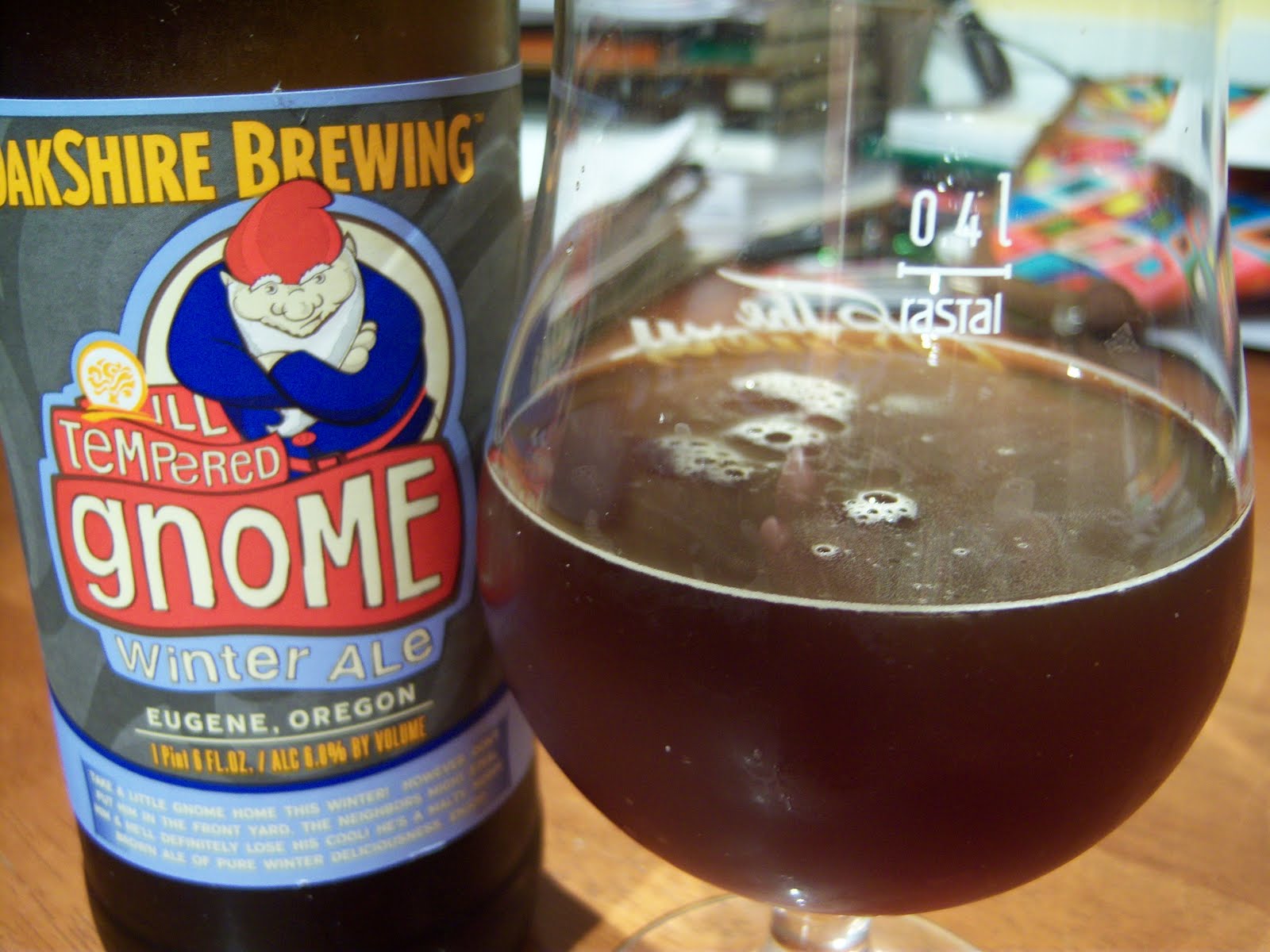
Ill-Tempered Gnome pours a mix of orange and mahogany, with a light tan head that rouses rather easily. It appears mostly clear in the glass, although there might be a slight chill haze. Aromas combine brown malt and candy sweetness—it’s a mixture of English and Belgian, with the elements Elli describes as “old ale-like” winning out. There are also hints of biscuit malt and fruit hiding in the back. As it warms, Elli’s “old ale-like” character increases—there is a bready fruit component that strikes me as figgy bread pudding. Flavors start sweet and bright (and yes, I find that an odd description as well) with biscuit and brown malt; there is a hint of caramel and molasses in the middle before the sharp, clean bitterness takes over. Some of the brown malt comes back in the finish—present as a touch of roast and almost but not quite chocolate—but it is in a losing battle with the bitterness, which lingers pleasantly on the back of the throat. As Elli notes above, the body is lighter than expected—it is medium, with the hop bitterness further contributing to lightening the beer on the palate. The bitterness does pick up as the beer warms, but that’s almost petty to note—this is a winter ale we can both get behind. And, as I am sure Jeffrey is just waiting to blurt out in the comments, no one should be surprised by that. Because as we all well know, West Coast breweries both invented and perfected the winter ale. And yes, that is a fact so transparent, it needs no justification. Now if they’d only do something about all those damn pumpkin ales. Nice work, Oakshire.

From the bottle: “Take a little gnome home this winter! However, don’t put him in the front yard. The neighbors might steal him & he’ll definitely lose his cool! He’s a malty, hoppy brown ale of pure winter deliciousness. Enjoy!”

ABV: 6.8%
IBU: 65
OG: 15.5° P

(12/15/2011)

Wednesday, December 14, 2011

500. Abbaye de Saint Bon-Chien 2006

Our 500th beer. Dag. Well, I guess it’s time to go fancy. Described on the label as a Swiss Ale de Garde aged in oak barrels, this bottle of Abbaye de Saint Bon-Chien was brewed by Jérôme Rebetez at Brasserie des Franches-Montagnes in Jura, Switzerland. Which also makes this our first Swiss beer, unless I am mistaken (and upon checking, I’m not, although I did make a sweet Switzerland joke here).

Abbaye de Saint Bon-Chien pours a hazy and slightly muddy caramel, although chestnut might also be appropriate. It also has some red hints to it as well. The head is thin and white, and barely hung around long enough for this picture. A thin ring is maintained around the edge of the glass by the tiny white bubbles wending their way through the beer. The nose is tart and sharp—it made my mouth water just from smelling it. There is also some dark fruit behind the acetic sharpness, and a touch of alcohol. When we first opened it, there was a brief perfume-y spiciness that dissipated quickly. As it warms, the vinegar becomes more pronounced, but also merges more with the fruit to offer a delightful olfactory treat. Flavors start sweet, sharp, and dry—a pleasant combination of yeast, oak, and age. The acetic acid sharpness is balanced by the residual sweetness in the body, taking on an almost sherry quality as the beer warms. As the initial vinegar tang wanes, the beer further dries on the palate in the middle, allowing both oak and alcohol to emerge in the finish; nonetheless, the sharp tartness continues to linger on the palate well after the other flavors have disappeared. The initial tart bite is enough to bring a slight flush to my cheeks after a couple of sips, allowing the sharp initial snap to blend with the gentler lingering sour flavors and creating a delicious harmony. The alcohol is well-hidden but evident; there is, after all, only so much you can do with a lighter-bodied 11% beer. Elli thinks it would be improved by lowering the alcohol a bit, which I agree with, and that the lingering vinegar sharpness is annoying, which I don’t. Abbaye de Saint Bon-Chien could also use an increased complexity of flavors beyond the acetic tartness. While the acidity is subtle and complex, it does get a bit one-dimensional by about two-thirds of the way through the bottle, and added warmth tends to further flatten the other characteristics. Nonetheless, a solid and interesting beer—some of the 2010 just turned up at Belmont Party Supply, so I may have to buy a bottle of that to salt away for future posterity. And here’s to 500 more!

From the Brasserie des Franches-Montagnes website: “L’Abbaye de Saint Bon-Chien, Strong sour ale, 11% vol. est un réel OVNI, c’est une bière brassée en l’honneur de l’ancienne chatte de la brasserie, sanctifiée lors de sa disparition. Cette cuvée aux reflets rouges-ambrés est mûrie pendant de longs mois dans des fûts de chêne ayant déjà contenu du vin ou des eaux-de-vie. Ces fûts donneront des arômes très complexes à cette bière. En bouche, elle rappelle la trame d’un vin rouge fruité avec une acidité très marquée.”

ABV: 11%
No. on bottle: 00276
Brewed: 2006
Blended: April 2007

(12/14/2011)

Tuesday, December 13, 2011

499. Founders Nemesis 2010

Nemesis is a beer Founders makes once a year, and every year (well, all two thus far) it is different; as it says on the label, “every batch diabolically brewed to decimate ordinary-average-run-of-the-mill tasting beer.” Sounds about right for Founders. Make it big, make it meaty, make it for Michigan’s brutally long winter. How else do you end up with a 12% beer with 100 IBUs? How else indeed! Fittingly, this is our tenth beer from Founders, including Newaygo County Cherry, Devil Dancer, Pale Ale, KBS (as a bonus beer), Centennial IPA, Black Biscuit, Harvest Ale and Breakfast Stout.

Described on the label as “anti-establishment ale,” Nemesis 2010 pours a rich deep chocolate with ruby highlights; it is crystal clear, albeit dark, and has just the waftiest skiff of tan foam with miniscule almost invisible bubbles slowly climbing through the viscous fluid. And, not surprisingly with the 12% ABV, this beer has visible legs on the glass. The nose is interesting—there is a fair amount of caramel and molasses mixed with spiciness, dark fruit, and chocolate, which simultaneously works and doesn’t work. I’m leaning towards works right now, but I reserve the right to change my mind. As it warms, alcohol also becomes evident, although more as a floral accompaniment than as anything distracting. Flavors start soft and delicate on the tongue, with first the light caramel and dark fruit—raisin, fig, and cherry—followed by chocolate as it heads into the middle. There is also a fair amount of bitterness in the middle, but it has to work pretty hard to fight through the viscous fluid and heavier flavors, although the hops could be the source of the spiciness in the nose—either that, or some rye malt. Bitterness is also evident in the finish, coupled with a fair amount of caramel sweetness; the effect is very similar to the bigger, thicker DIPAs and Imperial IPAs, including the light alcohol warmth, but the residual chocolate and nutty flavors set it apart. The body is thick and chewy, but at the same time surprisingly clean—I expected more stickiness from this big a beer. My guess would be the lighter effects are created by wheat or rye in the body that couples with the slight warmth from the alcohol to brighten the whole. Further warmth produces some sherry-like fruit and alcohol flavors that bring further lightness to the palate, mostly in the middle and finish, but also in the nose. To be honest, Nemesis 2010 is both darker and better than I expected—there is balance and subtlety developing in this beer that will be even better in another couple of years.

From Ratebeer: “The 2010 release of Nemesis is best described by our brewing team as ‘a dark barley wine that pours black with a subtle mahogany hue. Brewed with 5 malts and no shortage of hops for a pleasantly bitter booming flavor. Roasty and toasty with a multitude of tastes that melts on your tongue.’”

ABV: 12%
IBU: 100

(12/13/2011)

Friday, December 9, 2011

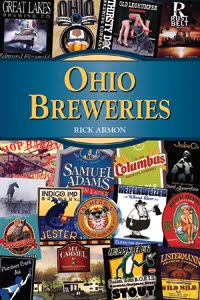
Ohio Breweries: Book Review

Ohio Breweries, by Rick Armon, is the latest addition to Stackpole Books’ Breweries Series that features, most famously, several works by Lew Bryson. And like Bryson’s books, this one is a nice asset for those who want a quick and useful reference guide to the breweries in Ohio. Its strengths include clear organization and helpful information: it provides all the details for when and where to go, as well as how to contact the necessary people. Additionally, many of the stories about individual brewers and breweries regarding their start in the business are interesting and told with an eye for the story—I am now much more interested in visiting Rust Belt, Indigo Imp, and a couple of the Erie Island breweries via the personal experiences Rick describes in the entries for those breweries. Rick’s book also includes some details I didn’t know, like that Ohio is “one of the largest beer-producing states in the nation,” ranking “in the top five” in terms of overall production (5). This is especially hard to take living in Dayton, which currently has no local beer production—Wooden Shoe and Rivertown are both far enough away to make Tom a very sad boy.

The weaknesses are few, but I feel compelled to mention them. The self-referential Cleveland in-jokes feel forced: “Let’s dispense with the Cleveland jokes. No humorous elbows about the ‘Mistake on the Lake’ or the burning Cuyahoga River or anything like that” (17). This assumes a familiarity with the area and the jokes describing that area that I don’t have, creating an effect that felt mainly off-putting. And they continued. As well, in a book that relies on a craft beer drinking audience, he fawns a bit too much over Anheuser-Busch InBev and MillerCoors. Sure, “Ohioans love Anheuser-Busch” (7-8), but all those Bud Light drinkers ain’t buying your book. Finally, he notes that “Columbus finally got its first major professional sports franchise in 2000 when the Columbus Blue Jackets hockey team arrived,” and then continues one paragraph later that “the city also has been home to Major League Soccer since the mid-1990s” (83). Ouch! Calling hockey the “first major professional sports franchise” in Columbus means one of two things: either you hate soccer or you have an over-inflated sense of the relevance of hockey. Neither of which, might I add, is good. Oh, and he also quotes Casey McAdams, which means I’ll have to hear about that for the rest of my god-damn life. But that’s more a personal problem than a flaw on Rick’s part. Still, regardless of few downsides, it is a useful reference guide for the breweries around the state—I’ll be taking it with me the next time I head north to Akron and Cleveland.

See also Alan McLeod’s review. Check-it-check-it out.

(12/9/2011)

Thursday, December 8, 2011

498. Victory Headwaters Pale Ale

Let’s start with the obvious. Headwaters drops science like Sean Morgan talks game. Or drinks beer. Or flim-flams. You get the picture. That’s right, I’m bagging on ol’ Mercury. Because today, he officially got older. And if you don’t get the reference, you can check with this guy. Anywho, Victory is back. Not like they went anywhere. Our other encounters with Victory include Yakima Twilight (since renamed Yakima Glory), Saison du Buff, the collabo with Stone and Dogfish Head, plus Prima Pils, Baltic Thunder, HopDevil, and WildDevil.

Headwaters pours a light, clear copper; it has only a slight haze, and a thin but consistent white head with profuse small bubbles rising through the beer—which is just another way of saying that Headwaters is pretty. The hop aroma in the nose is delightful—citrus—including lemon zest, orange and grapefruit—coupled with spicy resin and a dank mustiness. At the same time, however, it is bright and floral, followed by a touch of biscuit malt. Flavors start dry and lightly spicy; the biscuit malt flavor comes out in the middle, along with the resin and a slight hint of evergreen that follows through into the finish. The bright bitterness builds gently across the profile, contributing to the dry, biscuit-like, almost cracker-y finish. Bright, crisp, dry, and bitter, yet carrying plenty of subtlety—this beer is top-notch. I’d drink Headwaters all the time if I could actually find it on a regular basis; my best bet is to follow the example of my current mild experimentation, and get busy crafting myself a light, easy-drinking APA that goes down like this luscious liquid gold. Not that I’ll be topping Headwaters anytime soon. But I can certainly give it the ol’ college try, can’t I?

From the bottle: “Malted barley, hops, and yeast are the building blocks of beer. But none of these elements would exist with water, the essence of life. The waters that feed our brewery begin just over a dozen miles away, making for spectacularly pure and vital water for brewing. Having worked with watershed advocacy groups since our inception, we value our headwaters, our source, in many ways. We think you’ll value them as well when you taste this firmly crisp and aromatically arousing pale ale. Cheers!”

ABV: 5.1%
Malts: imported German 2-row
Hops: “whole flower American”—what the hell does that mean? My call is Citra
First release: Feb. 15, 2011

Happy Birthday, Sean! Get that drink on, my man!

(12/8/2011)

Wednesday, December 7, 2011

497. Smuttynose Winter Ale

I’m not the biggest fan of winter beers and ales, unless they’re of the West Coast variety, which normally means more hops than spice—think Sierra Nevada Celebration, think Red Hook Winter Hook, or even think Anchor Steam Christmas Ale, which, while falling more into the traditional winter beer category, makes use of spices in a restrained and controlled manner. Read: the beer doesn’t taste like potpourri in a glass. But I am a fan of Smuttynose. So I decided to give this one a run. Or, better put, Elli decided to give this beer a run, since she bought the six pack. We’ve been hitting the Smuttynose IPA pretty hard as of late, so she decided to flip the script but keep the same crew in play. And as should be somewhat obvious by now, I’m always game with beer. Our earlier excursions into the land o’ Portsmouth include S’muttonator, Big A IPA, Old Brown Dog Ale, Baltic Porter, Imperial Stout, Shoals Pale Ale, Finestkind IPA and Farmhouse Ale. Scoring at home? That’s the kind nine.

Smuttynose Winter Ale pours a rich deep raisin-colored chocolate, something that looks chewy and inviting and decadent. For that reason, I am officially dubbing the color of this beer “figgy chocolate bread pudding.” How’s that for a name? It also appears rather clear, but since I can’t actually see through it, I’m not really certain. Works for me. The head is an off-white/eggshell cream color, but it rings rather rapidly, leaving me staring at the small skiff of cream and the luscious figgy goodness of my delicious repast. The aroma is mainly chocolate—more cocoa than milk—backed up by caramel sweetness, cracker-y biscuit notes, and even fainter spice and fruitiness. My fig and raisin gamboling might actually have some merit here. Flavors follow the nose pretty closely, although not in the same order—dry cocoa and chocolate into caramel, raisin, fig, and fruitiness. There is a possible touch of cinnamon and nutmeg spice lurking in the middle and the finish; either that, or some yeast phenol/spiciness. If forced to choose, I’d lean towards the latter. These flavors come across with the biscuit dryness in the middle, which blends well with the drier cocoa flavors that also return in the finish. While the flavors contribute to dryness of the beer, the beer does have some body on the tongue—it is slightly chewy even though the flavors run counter to that. The carbonation is gentle but present, and helps accentuate some of the biscuit and cocoa flavors in the final third of the beer. All in all, this was a very pleasant surprise. Thank you, Smuttynose, for the balance and restraint in this beer. If you were attempting to curry my favor for your previous failings (ahem! Big Beer! ahem!), consider it a job well done.

Hand-drawn map of Smuttynose Island from here

From the Smuttynose website: “Smuttynose Winter Ale is a full-bodied, amber beer brewed with a special Trappist ale yeast. Stylistically reminiscent of a Belgian Abbey Double, it features fruity aromas and flavor, balanced by soft Crystal hops. Warming, mellow & pleasantly complex, Smuttynose Winter Ale is your perfect cold weather companion.”

ABV: 5.1%
Best before: 4/17/2012

So it seems that the lesson here is that I like Winter Ales that really aren’t Winter Ales.

(12/7/2011)

Tuesday, December 6, 2011

496. Kriek De Ranke

Our second beer from Brouwerij De Ranke in Wevelgem, Belgium—our last one was Cuvée De Ranke. I do like the pink label on the bottle—this label far surpassed our last pink Belgian beer label, and the beer is, well, light-years ahead.

Kriek De Ranke is described on the label as a “70% Belgian sour ale fermented with cherries with 30% lambic added.” It pours a faint maraschino cherry red—faint because it is lightly pink-hued, and not as deep of a red as maraschino cherries are by themselves. The head is thin, white, and pink; it quickly fades, although there is a fair amount of small streaming carbonation up the sides of the glass to keep a faint ring along the edge, while the nose is a mix of musty cellar, tartness, and old mown hay. Basically, it is all the good parts of your grandparents’ basement, and, might I add, none of the bad. I find the aromatic nuance of the nose beguiling, while Elli queried as to what I meant by old mown hay. To be honest, I’m not completely certain, but it strikes me as close a descriptor as I can muster to describe the beer’s bouquet. Flavors start sharp and bright; the initial cherry flavor is mixed with citric tartness—repeated tasting and contemplation brought a light flush across my cheeks. The tartness rises in the middle, with the mineral brightness coming to the foreground, and the prickly carbonation helping push these palate sensations to the forefront, allowing the tartness to dominate and finish the beer. A delicate cherry flavor lurks on the back and sides of the tongue as the main thrust of tartness drops away, resulting in a clean yet tantalizingly subtle finish—the cherry flavor is reserved but adroit, coming across far gentler than the color might indicate. Elli notes she would like a bit wider range of flavor, and I mostly agree. Nonetheless, the sparse composition is a study in understatement; while the ethos behind this beer runs counter to a fair amount of American brewing ingenuity, it is something I wish that brewers on this side of the pond considered in greater depth.

Love the highlights...

From the Brouwerij De Ranke website: “Kriek De Ranke is a 7% vol. Alc. Kriek that’s unique because the composition is based on two different styles of sour ales. Being the red-brown style from the Roeselare/ Kortrijk/ Oudenaarde-region and the Lambic style from the Pajottenland-region, close to Brussels. We produce and acidify the red-brown ale ourselves, after which we add 25% sour cherries. These cherries stay in the ale for 6 months. Once fermented, the cherries come out and we add Lambic from Brewery Girardin. After this the ale matures for a while before being ready to drink. It’s an explicit thirst quencher, that contains nearly no sugar.”

ABV: 7.0%

(12/6/2011)