Monday, October 31, 2011

489. Weihenstephaner Festbier

What would Fall be without German beer? Let me tell you—someplace dark, strict, and terrible. Sure, the whole lack of hops thing coupled with Reinheitsgebot does create some problems, but without the larger benevolence that is the dream of Oktoberfest, we’d be relegated to some sort of creepy Amish nightmare world, shunning technology and recounting previous days of Rumspringa as the only recourse to staving off the vengeance of assaulting our fellow Amish and shaving off their beards. Oh wait, that already happened. My bad. Plus, all of us non-Amish still have to deal with the aches and pains of adult responsibility, technologically driven or no. But you know what separates us from the Amish, don’t you? That’s right, my friend. Beer. Sweet, delicious beer. Which brings me back to Germany. So thanks, Germany, from keeping us from ending up like the Amish. Or the Shakers. Or even (and more importantly) the Mormons. I wish I could lay claim to beer being the solution to all of our fundamentalist religious problems, but that might be going too far. But it would make a good start, wouldn’t it?

Weihenstephaner Festbier is our fifth beer from Bayerische Staatsbrauerei Weihenstephan in Freising, Germany. We already sampled the magic of Korbinian, Hefe Weissbier and Dr. Fritz Briem 1809 Berliner Weisse. Festbier pours a clear gold with a brilliant white head that slowly reduces to a ring; the nose features bread crust and dough malt aromas coupled with a light hop bitterness dancing in the background. There is also an ephemeral candy sweetness in the nose that took me most of the beer to pin down. Flavors start soft and gentle on the palate; the carbonation is there, but more as a rounding characteristic. Malt flavors include bread and a slight graininess; the hop bitterness manifests in the middle, dropping off before the finish and reappearing as a palate sensation of lingering bitterness at the conclusion of the beer. There is a slight rise in sweetness in the middle right before the carbonation strips the flavor away, leaving a graininess and huskiness that melds with the bitterness of the finish. There is a touch more malt character than some of the other Weihenstephan beers, but it still has a delightful balance—the traditional hop character of a lager beer lurks behind the malt character, asserting itself as the beer starts to warm. But the overall character of the beer is clean and crisp—it says drink me on a brisk fall afternoon with the smell of dead leaves and change in the air, and I’ll remind you that the pleasure of seeing and experiencing the closing of the year connects you to the natural rhythms of the world. And while that may seem like a lot for a beer to do, maybe you need to get the hell out of the house and drink more beer outside by a fire with the crisp bite of fall in air to understand what the hell I’m talking about. Either that, or start planning now for your mid-life crisis so that the fireworks of your lost detachment can outshine the futility consuming your life. Here’s a better plan—get out there and live.

From the Weihenstephan website: “A full rich bodied, hoppy, seasonal lager. Especially brewed for the Festbier season. This beer truly represents the Bavarian way of celebrating. Deep gold color, great mouthfeel and lots of flavor. Prost!”

ABV: 5.8%

(10/31/2011)

Friday, October 28, 2011

488. New Holland Hopivore Michigan Wet-Hopped Harvest Ale

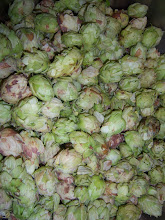
Another fresh-hop beer. After all, it is the season, and I just can’t say no to all the new versions popping up everywhere I look. That’s right, I’m a fresh-hop mark. Or maybe I’m a fresh-hop john. Basically, whichever one is more offensive. Yes, I choose that one. You heard me. So take that, adverb boy. Because I’m ruffling feathers today. Mixing it up. Pulling the rope-a-dope. And no, I don’t know where this is going. But I like it. This is our sixth beer from New Holland (including the bonus beer, Envious) ; previous encounters include our short but passionate affair with a curvaceous bottle of Beerhive Tripel, El Mole Ocho, Dragon’s Milk, Golden Cap Saison, and Envious.

Hopivore pours a mix of orange and copper—it’s very harvest-y, I guess—with a thin eggshell head that reduces to a ring rather rapidly. Ah, alliteration, how I love thee. In the nose, there is a pretty even mix of malt and hops, with spice and pine on the hop side and biscuit and amber on the malt side. Flavors follow suit—there are toasted bread and biscuit malt flavors mixed with caramel sweetness in the front, coupled with a bright spicy hoppiness. The middle has an even pleasant bitterness that balances the malt character, leading to a rather balanced finish that features a touch of evergreen pine hop flavor before the gentle lingering bitterness that mixes with the dry biscuit malt character. The balance is nice, although the biscuit and caramel malt is too much in the front of the beer—the subtlety of the hop aroma and flavor is muted by the more distinctive malt characteristics. At the same time, the body is medium to light—much of the sweetness is in the taste, not the mouthfeel. This is a pretty decent beer, and certainly very drinkable (and enjoyable as well), but it is trying to do too many things at the same time. In looking to combine the fall harvest ale with the fall wet-hop beer, New Holland has turned two good beers into one that is muddled more than anything else. Either crisp up the finish of the malt character with a lager yeast and forget about the fresh-hop, or drop the harvest component and lighten the malt character in the body to showcase fresh-hop nuance and complexity. Either/or: don’t do both. I do love wet-hop beers, but most non-West Coast versions treat this style as more novelty than craft. Dammit.

From the bottle: “Michigan-grown hops are the story in this seasonal harvest ale. Hopivore is wet-hopped, with hops added to the brew just hours after harvest, creating rare, fresh flavors.”

P.S. That Farmhouse Hatter IPA you guys made was top-notch—it still stands as one of the best examples of a Belgian IPA that I’ve tried to date.

(10/28/2011)

Thursday, October 27, 2011

Dandelion Saison w/ Brett B Brewday

We can officially declare this one more of the same; I wanted to make another version of this with hops so that it would have some staying power. I also used MFB Aromatic rather than Pilsen malt, and whole dried dandelions from this summer—I combined cleaning up the yard with gathering brewing supplies. Genius, I know. The no-hop version tasted delicious when I transfered it over—a light earthy herbal bitterness with the brett character just starting to manifest in the background. Here’s to more of the same.

102. Dandelion Saison w/ Brett B
Mash:
8 lbs. MFB Aromatic
1 lb. Weyerman Dark Munich
1 lb. Dingemans CaraMunich 20° L
1 lb. Breiss White Wheat

Mashed @ 153° F w/ 4 gallons of RO water for 70 minutes; collected 2 ½ gallons @ 1.064
Batch sparged @ 172° F w/ 3 ¾ gallons RO water for 20 minutes; collected 3 ¾ gallons @ 1.026

Collected 6 ¼ gallons; brought to a boil (70 minute) and added:

w/60 to go: 2 oz. New Zealand Pacific Hallertau pellet 4.5% AA
.75 oz. dried dandelion (whole)

w/15 to go: 1 tsp. Irish moss

w/10 to go: 1 oz. German Hallertauer leaf 4.1% AA
.7 oz. dried dandelion (whole)

w/5 to go: 1 oz. German Hallertauer leaf 4.1% AA
.6 oz. dried dandelion (whole)

Chilled, and racked onto Wyeast 3711 French Saison & Wyeast 5112 Brettanomyces bruxellensis cake from 101. No-Hop Dandelion Saison

Brewed: 10/27/2011
Secondary: 12/16/2011 @ 1.002
Bottled: 3/2/2012 w/ 4 oz. table sugar

OG: 1.048
FG: 1.002

Tasting Notes (7/27/2013): I’ve held out on typing up notes on this because I wanted to see the effect aging had on it. Dandelion Saison pours a copper orange—the pound of dark Munich is really showing here—with a creamy white head that laces the glass well. The head also has better retention than some of the Brettanomyces beers I’ve made in the past—we’ll see how that goes in the future. In the nose, I get candy, floral earthiness, and spiciness with a touch of mineral mustiness, or in other words, pretty much what I’d expect from Brett B. Flavors follow suit: there is bread crust and candy sweetness in the front that gives way to the dry, spicy earthy funk of the middle. There is hay and fresh fall dry leaves in the finish, alongside just a touch of alcohol and a mix of lingering funk and herbal bitterness. While the beer has some sweetness, it is bone dry in the body—crackery bone dry. Besides the herbal bitterness in the finish, there is less dandelion that I expected, although at this point, everything has blended together virtually seamlessly, so even picking it apart this much has taken some time. I’m happy I have a fair amount of this left; I’m looking forward to seeing how it continues to progress.

Saturday, October 22, 2011

CMI Oktoberbest Zinzinnati Beer Judging

This year’s Oktoberbest was held across the river in Kentucky on the 16th floor of the Radisson (sorry, Northside)—nothing like a scenic view of downtown Cincinnati to set the stage for drinking beer first thing in the a.m. No, wait—let’s paint a better image of beer judging than that. After all, if I was a college football fan, I’d already be drunk at this point. And while my comparison is neither nice nor fair, I’m comfortable enough with myself to point out that I don’t care. Take that, annoying drunken Ohio State fans. Yes, college football, I accept your apology.

First beer of the day: 10:08 a.m.

For the morning flight, I judged Category 10: American Ale with Frank Barickman; there were actually six judges total, with a queued flight of 22 beers, but I was paired with Frank. Judging with Frank is always a treat—he’s witty, knowledgeable, and an all-around good time. After our lunch in the revolving restaurant at the top of the hotel (ah, the 70’s), I judged Category 14: IPA with Jim Matt, one of the brewers at Sun King in Indianapolis. Again, this was a queued flight with six judges—I think there were 21 beers total—and I had an enjoyable time discussing beers with Jim and trying to learn as much as I could from him. After the judging finished, Jeffrey and I swung by the Party Source on our way out of town, and then headed back to Dayton. Ah, the life of a beer judge. Oh, and results are here.

As far as swag goes, CMI still sets the bar. Last year, a gift certificate to Northern Brewer. This year, portable coolers for all the judges. Damn. I’ll certainly be back next year.

(10/22/2011)

Thursday, October 20, 2011

No-Hop Dandelion Saison w/ Brett B Brewday

This beer is my entry for this year’s DRAFT Iron Brewer Competition. And, as you can probably guess, this year requires brewing a beer without hops. I know, I know. Consider this revenge for Reinheitsgebot. My recipe for this one pretty much follows 98 (hell, I’m even using the same yeast cake), with the exception that I cut the hops and pitched a package of brettanomyces bruxellensis, the hope being that if there are no remaining sugars in the beer—simple or complex—it will be harder for any type of infection to flourish. Gotta like that solid logic, huh? Sure, I could have gone with wormwood or lavender tips to offer some preservative qualities, but I'm a risk-taker. Plus, the other dandelion saison tasted delicious when I switched it over to the secondary—the light mineral & herbal bitterness is a good match with the lighter body of the saison. And given that 3711 ran the last one down to 1.000, adding the brett should pretty much close out anything worth consuming rather rapidly.

101. No-Hop Dandelion Saison w/ Brett B
Mash:
8 lbs. MFB Pilsner
1 lb. Weyerman Light Wheat
1 lb. Weyerman Light Munich
1 lb. Weyerman Acidulated Malt

Mashed @ 152° F w/ 4 gallons of RO water for 90 minutes; collected 2 ½ gallons @ 1.062
Batch sparged @ 167° F w/ 3 ¾ gallons RO water for 20 minutes; collected 3 ¾ gallons @ 1.024

Collected 6 ¼ gallons; brought to a boil (70 minute) and added:

w/60 to go: 3 oz. dandelion leaves, coarsely chopped
1 oz. dandelion root, coarsely chopped

w/15 to go: 1 tsp. Irish moss
2 oz. dandelion leaves, coarsely chopped
.7 oz. dandelion root, coarsely chopped

w/5 to go: 2 oz. dandelion leaves, coarsely chopped
.7 oz. dandelion root, coarsely chopped
1 0z. crystallized ginger, coarsely chopped
6 g. hibiscus flowers
1 g. grains of paradise, lightly crushed

Chilled, racked to carboy, and pitched on Wyeast 3711 French Saison cake from 98 (swirled up and dumped half of cake out); added Wyeast 5112 Brettanomyces bruxellensis

Brewed: 10/20/2011
Secondary: 10/27/2011 @ 1.008 & 64° F
Bottled: 12/16/2011 w/4 oz. table sugar

OG: 1.046
FG: 1.002

Tasting Notes: (4/12/2012) I purposefully waited to type up these notes because I was interested to see if the beer would spoil. I figured the dueling experiments of no hops combined with the lack of sugar via the Brettanomyces bruxellensis would create something of a beer storage detente. And that is precisely what has happened. No Hop Dandelion Saison pours a faintly hazy and dirty gold with a thin white head that never quite fully disappears. The nose starts with a slight tartness—a mixture of faint cherry and acidity—before giving way to soft bread dough and faint graininess. All the while, there are hints of earthiness and herbal mustiness infused with malt candy sweetness dancing around the edges. The mouthfeel is dry, tart, thin, and sharp; the Brett B and acidulated malt influences are equally apparent, as is the utter lack of body to the beer—it is, to put it bluntly, bereft of substance as it is brimming with flavor, although there still might be a touch of residual gumminess. Flavors open with graininess and candy before giving way to an earthy, musty dryness in the middle—it is slightly reminiscent of the flavor and bite in champagne, although there is more dirt and earth here. In fact, I’d be inclined to describe the flavor in the middle as hop bitterness if I didn’t know this beer was lacking them, but I’m guessing that is the dandelion doing its work here. There is just a touch of residual sweetness in the finish—light and bright—before the musty funk and herbal bitterness returns to dry out the palate. As a whole, this beer is delicate and complex; it is simultaneously soft and bright on the palate, and the slight funk provided by the Brett B blends well with the soft malt and dandelion. I’m not sure I like it, but I would certainly drink it. And if nothing, this has certainly been a successful experiment—I’ll pop another one in another six months and see where it is at.

Monday, October 17, 2011

487. Goose Island Fleur 2010 & 2011

Somewhere along the way, we pulled out bottles of Goose Island’s Fleur from 2010 and 2011 and drank and compared them. I’m not sure exactly when, but I have discovered both the notes and photographic evidence to prove it—how’s that for your classic forensic evidence? I even think we invited Jeff and Jeffrey over to enjoy the fun, but at this point, who knows? Either or you two care to validate my spotty and shoddy memory? We’ll just call this our beer for “today,” and move on—after all, if you can’t learn to roll with it, you’re gonna have a painful, shitty life. Take that, Albert Camus—you can suck my existential dread. Now there’s a sentence I never thought I’d write. Anyway, this is our fourth beer from Goose Island. Previous ventures include Bourbon County Stout 2009, Summertime, and Honker's Ale. And in a shocking new development, future ventures will include Sophie and maybe even Matilda. That’s right—I can predict the future when we’ve got bottles awaiting us in the fridge. Does that make me a beer tease?

Fleur 2010: Fleur 2010 pours a clear tan with a thin white head; the nose is sweet candy mixed with floral and hibiscus. Flavors start dry, tart, and floral before moving into gentle sweetness and floral hibiscus in the middle. The finish is clean and even; there is a tart tang than increases as the beer warms. While the mouthfeel is gentle and delicate, the carbonation is sharper; yet both balance well in playing across the palate. My rudimentary descriptions aside, I can safely assert that the last year has been very, very good to this beer—it kicks the crap out of 2011.

Fleur 2011: Surprisingly, this beer is more carbonated than the 2010, with a darker red and pink coloring to the beer. The nose mixes caramel and candy; flavors start with floral and candy components, giving way to caramel in the middle with a muted candy sweetness, and a non-descript finish. This beer is not nearly as clean or as dry as the 2010. There is more body in the mouthfeel; however, while creating a more rounded feel on the palate, this same effect paradoxically limits the most subtle and enjoyable characteristics of the 2010. My advice: wait. This beer is an easy lesson in cellaring—it’s cheap, and you can buy another bottle next year to host your own comparisons. Just don’t misplace the notes...

From the Goose island website: “A Belgian style pale ale blended with hibiscus and kombucha tea, Fleur is a beautiful, rose-colored ale with an aroma of strawberries and hibiscus flowers. Her flavor balance starts with a hint of sweet, ripe berry and finishes tart.”

ABV: 5.2%
IBU: 32
Hops: Super Styrian, Styrian Golding, Saaz
Malt: 2-row, Caramel, Sugar

Does anyone besides me find the use of the pronoun “her” to describe a beer slightly creepy?

(10/17/2011)

Wednesday, October 12, 2011

486. Fort Collins The Incredible Hop Imperial India Wheat Ale

I’m glad that people like bringing beer over to my house, because sometimes we don’t drink it, and then later I find interesting bottles in the back of my fridge. Enter Fort Collins The Incredible Hop. I’m pretty certain that our friends Art and Chloe brought this over during the chaos of wedding week, and tonight when I was looking for that first sweet beer of the evening, I stumbled upon this. And yes, in the chaos of our fridge, it is possible to stumble upon things. So if you want to turn your snooty nose up at use for not being refrigerator neat-freaks, you go right ahead, Mr. Fridge Fascist (or Mrs., or even possibly Miss—my scorn knows no gender bounds). Anyway, this is our third beer from Fort Collins Brewery—we’ve previously wet our whistle with Rocky Mountain IPA & Kidd Black Lager. Dag-tastic!

The Incredible Hop pours a rustic tan—there are orange and yellow components, although no real highlights, since this glass has a raised bumpy design on it. This means the color is difficult for all of you to see in the picture, but these glasses are so sweet I still don’t care—maybe in another week I’ll feel some semblance of pity for my hoards of dedicated readers (feel free to self-identify in the comments if you aren’t Jeffrey or Lolli, but I’m guessing that pretty much covers it). Basically, it’s a light body for this big of a beer. The nose is a big punch of evergreen and pine hops with a touch of wheat gumminess in the background, and the initial flavors follow the nose: spicy pine and evergreen hop flavors in the front with very little in the way of malt flavor to get in the way. In the middle there is a pleasant bitterness to go with the spicy hop flavor before sliding into some chewy malt character and a pleasant lingering bitterness—one might even say the finish has a slightly dough-y malt character that sets up finishing bitterness quite nicely. The body is medium to heavy, but not really obtrusive—it is not even much of a factor, and while there might be a touch of alcohol in the finish as well, it is in the background. A good beer overall, but not one that is especially exciting. The lighter malt character allows the hops to shine, but it does still feel slightly out of balance—I’m not sure we’re feeling the “synergy” noted on the label, unless “synergy” is a codeword for boatloads of hops and “tartness” is the codeword for minimal malt character. And don’t you know, I’ve been ranting so much during this review that I’ve completely run out of beer. So I guess that means we’re done for now.

From the bottle: “This beer is the love-child of two of my favorite styles: big, hoppy IPAs and crisp, refreshing American Wheat beers. Synergy is achieved as the bold citrusy hops of the IPA harmonize with the thirst quenching tartness of an American Wheat. Pairs nicely with hikes to Horsetooth, Poudre River floats, and moonlit bike rides.”

This beer is part of a series of four high-gravity, highly hopped beers by Fort Collins. See here for more details.

Onion bubs indeed.

(10/12/2011)