Showing posts with label fresh/wet hop. Show all posts

Sunday, August 16, 2015

Smith Hop Fresh Hop Saison/Iron Brewer Brewday

While I will most likely not get around to brewing as many fresh hop beers as usual this year, I cannot stand by the wayside and watch the free Smith hops from next door go to waste, especially since I have such a long and storied history with them, and they are so so delicious. To complicate my brewing matters, I am also using this opportunity to make a split batch of beer and grow up some yeast to suitable pitch sizes. One is Wyeast 3276, their American Farmhouse, which is a pleasant, spicy, and slightly fruity saison yeast. The other is the Iron Brewer yeast created/blended by Brett Smith for the DRAFT club Iron Brewer brewing challenge that so ignominiously replaced the Rockit Cup. Whatever, haters. The Rockit Cup ain’t afraid of your Iron Brewer malarkey.

215. Saison/Iron Brewer Fresh Hop
Mash:
2 ¼ lbs. MFB Vienna
2 lbs. MFB Pale
2 lbs. Best Malz Wheat
1 ¼ lbs. Best Malz Pilsen

Mash @ 151° F for 80 minutes w/ 3 gallons RO water, 4 g. gypsum, and 4 g. CaCl; collected 1 ¾ gallons @ 1.062
Batch sparge @ 163° F for 20 minutes w/ 4 gallons RO water; collected 4 ¼ @ 1.022

Collected 6 gallons; topped off to 7 gallons, brought to a boil (70 minutes), & added:
FWH: 4 oz. fresh hops

w/20 to go: 4 oz. fresh hops

w/10 to go: 4 oz. fresh hops

w/0 to go: 4 oz. fresh hops

Let stand for 20 minutes, chilled, split into two three gallon carboys, and pitched Wyeast 3276 in one (215a.) and Iron Brewer yeast in the other (215b.)

215a. Fresh Hop Saison
Brewed: 8/16/2015
Secondary: 8/30/2015 @ 1.002
Bottle: 9/19/2015 w/ 1.2 oz. table sugar

OG: 1.036
FG: 1.002

215b. Fresh Hop Iron Brewer
Brewed: 8/16/2015
Secondary: 9/19/2015 @ 1.000
Bottle: 9/20/2015 w/ 1.2 oz. table sugar

OG: 1.036
FG: 1.000

Tasting Notes: 

Monday, April 13, 2015

Fresh Hop 2014 Recap

I spent the weekend contemplating what I learned from brewing this year’s round of fresh hop beers, mostly because I came across a bottle of Deschutes Chasin’ Freshies at Belmont Party Supply and felt compelled to pick it up. Yes, it was a bit past its prime—hop grassiness had started to cut through the more interesting hop flavors—but it was still certainly enjoyable. And my introspection led me to consider not only what I had learned this year, but also over the last couple of years of fresh hop brewing. Generally, I brew four or so fresh hop beers a year in my pursuit to retain the self-proclaimed title of Fresh Hop King of Ohio, which started in 2012 during a speculative moment similar to this one. Unlike most of my other posts, however, someone actually read that post and called me out on it, hence the small-scale competitions of the last two years. So what did I learn this year? 

1) Hop volume matters. One pound of fresh hops is not enough for a good or interesting fresh hop beer. Yes, you can adulterate your recipe with dried hops for the 60 minute addition to compensate for a lack of fresh hops, or mix dried hops in throughout the hopping schedule, but that is not really a fresh hop beer, is it? While getting multiple pounds of fresh hops is both difficult and expensive, it is worth it. I’m generally not a brewing purist, but when it comes to Fresh Hop beers, I am. The Bike Path Fresh Hop beer I made this year with almost 4 pounds of hops is the closest I’ve come to getting that gamey wild hop character you find in the best fresh hop beers, although it lacked the reciprocal hop flavor and aroma intensity I also desire. Next year, I’d like to combine a couple of different hop varieties in the same batch as a way to expand my repertoire—all of my previous fresh hop beers have been single-hop beers.

2) Simplify your malt bill. I learned some of this during last year’s round of fresh hop beers, but this year confirmed it. Want to use a whole bunch of caramel malt? Then you should probably just throw those fresh hops in the trash can right now. Unless you have multiple pounds of fresh hops to use in your beer. This year Pilsen was the base malt for all four of my fresh hop beers; I also used White Wheat in three, and MFB Vienna in the fourth as an experiment carrying over from last year. One beer did have a pound of MFB Pale, but that was because I ran out of Pilsen, and that was the most appropriate malt on hand. I did try a pound of acidulated malt the Smith Hop, which I will try again next year; the bright carbonation and slight tartness from the acidity really brought the beer together as a whole. And while I have no scientific justification for what I’m about to say, the acidity seemed to accentuate the subtle hop flavors—it was saison-like in brightness and acidity, and this was accentuated by the subtle hop flavors. Focus on the base malt, and cut out the darker and sweeter malts.

3) Yeast selection matters. I initially started with “pick a clean, neutral yeast,” but thought better of it. This year, I used US-05 for three of the four fresh hop beers. While I know that US-05 is supposedly a clean, neutral yeast, all three of these beers had a similar subtle off-flavor in the finish that I found off-putting. The fourth beer went the opposite route; I used a blend of custersianus, bruxellensis Trois, and Lactobacillus that is currently my house yeast, mostly because it was on hand when a couple of pounds of Nugget fresh hops magically came my way. It made a great beer, but by the time it got into the bottle, the Brettanomyces had decimated anything that might be identified as fresh hop derived, which was something of a tragedy, since those Nugget were the nicest fresh hops I had ever laid my hands on. Still, there are a lot of options between the two poles of neutral and wild; last year, I used ECY08 Saison Brasserie, WLP510 Bastogne, and Wyeast 1272 American Ale II in fresh hop beers. While the ECY08 might have been a bit too expressive of a yeast choice, the WLP510 paired well, and the Wyeast 1272 is a better clean, neutral American yeast selection that US-05, at least to my palate. 

For ease of reference, here are links to the fresh hop beers I’ve brewed over the last four years:

Bike Path Fresh Hop 2014 Fresh Hop King of Ohio winner 2014
Sour Fresh Hop w/ Nugget 2014
Brewer’s Gold Fresh Hop 2014
Smith Hop 2014
Last Wild Fresh Hop 2013
Brewer’s Gold Fresh Hop 2013
Smith Hop 2013 Fresh Hop King of Ohio winner 2013
Cascade Fresh Hop 2013
Last Wild Fresh Hop 2012
Smith Hop 2012
Wild Wet Hop 2012
Wild Wet Hop 2010

(4/13/2015)

Thursday, September 11, 2014

Bike Path Fresh Hop Brewday

Time again for my annual bike path fresh hop beer. There were a lot of hops on the bike path this yearsome of the biggest ones I’ve ever seen. That wet crappy summer gave way to a whole bunch of late heat, and those hops went to town. I picked all the hops for this beer within 400 yards of each other along the bike path. And I wasn’t picky either. I picked enough to cram my brew kettle full: almost four pounds of fresh hops total, and two pounds in the final twenty minutes. Damn. Big learning.

183. Bike Path Fresh Hop

Mash:
8 lbs. Rahr Premium Pils
3 lbs. Breiss White Wheat

Mash @ 150° F for 90 minutes w/ 4 gallons RO water & 6 g. gypsum + 3 g. CaCl; collected 2 ¾ gallons @ 1.078; FWH with 1 lb. of bike path fresh hops
Batch sparge @ 170° F for 20 minutes w/ 4 gallons RO water; collected 4 gallons @ 1.028

Topped off to 7 gallons, brought to a boil (90 minutes), & added:
FWH: 1 lb. bike path fresh hops

w/60 to go: 12 oz. bike path fresh hops 

w/20 to go: 8 oz. bike path fresh hops + 7 g. gypsum

w/10 to go: 8 oz. bike path fresh hops + 3 g. Wyeast yeast nutrient

w/5 to go: 8 oz. bike path fresh hops

w/0 to go: 8 oz. bike path fresh hops

Let stand for 20 minutes; chilled & pitched packet of US-05

Brewed: 9/11/2014
Secondary: 9/22/2014 @ 1.004
Bottled: 10/7/2014 w/ 2.5 oz. table sugar

OG: 1.054
FG: 1.008

Tasting Notes: For the sake of science, I’ve combined my fresh hop tasting notes for the year. As the photos attest, I did try them all at the same time. The second picture is from the 2nd Annual Fresh Hop King of Ohio competition with Brent Osborne, where my beers came in 1st (183), 2nd (178), and 3rd (182). Yes, there were only seven beers, and four of them were mine. But I’m still the Fresh Hop King of Ohio for 2014, dammit. I would add (as I note below) that 178 is probably the best beer, but 183 is the best fresh hop beer.

178. Smith Hop: made with Cascades from my neighbors; last year, it was by far the best fresh hop beer I made, and it won me the Fresh Hop King of Ohio title. This year it is the best beer in terms of quality, but I am giving the nod to the Bike Path 
Fresh Hop as the best of this year’s fresh hop beers. Smith Hop is the lightest of the four in color, and the most effervescent; it pours a hazy straw with a rocky head, and has lemon zest, lemon, and grapefruit in the nose, along with hints of pepper and orange. Flavors open with lemon and lemon zest, moving into a mineral and pepper bite in the middle, and finish with grapefruit and a slight citrus pith. The malt flavors in the beer are mainly playing a supporting role, while the bitterness is medium and clean. I expected more grassiness from dry hopping this with 4.6 oz. of fresh hops for two weeks (I left a bunch on the vine, and then picked them fresh for dry hopping); as it warms, a slight phenol gaminess comes out, but it balances well with the citrus flavors. Those Smith Hops rock!

180. Brewer’s Gold Fresh Hop: I’ll start with this: I don’t like this beer. It has some off-putting flavors, starting with the phenol band-aid of stressed/unhealthy yeast (as opposed to infection) and ending with the blandness and wood-like flavors from the hops. Others did not have as strong of a negative reaction to this beer as me, but I’m going to chalk that up to them being nice. While the beer did sit too long on the yeast, I’m still not sure how it ended up here. I got these hops from Brent Osborn at Osborn Brewing; I’m not blaming him, however, as the Brewer’s Gold fresh hops I got from him last year were phenomenal. BGFH pours a hazy gold with a thin white head that leaves some lacing; at one point, there were hints of orange marmalade in the nose and body, but currently the nose is merely “hoppy.” Flavors include a light bitterness and scratchy green grass character, but not much else worth noting. Mouthfeel and body match, but off-flavors mar this beer. Haters gonna hate. 

182. Sour Fresh Hop: made with Nuggets from Heartland Hops. This beer is straw colored and crystal clear, with a thin white head that disappears quickly. The nose is herbal and earthy, followed by sour orange and candy pilsen; going into the carboy, there was a much more intense herbal hop aroma that I wish was still here. Flavors open with candy and a slight grain-y Cheerios flavor coupled with wood and herb; the middle features a spicy hop bite—albeit low—and more wood. The herbal flavors come out in the final third, lingering with a dry cracker malt flavor and a hint of sweetness. All in all, this beer is a hot mess—it is neither fresh hop nor sour, while showcasing components of both. While I do like it—it has some intangibles that make it eminently enjoyable—it is simultaneously a pedestrian beer that borders on insulting: I would be pissed off if this was served to me at a bar, but I am glad I made it. That clarify things enough for you?

183.Bike Path Fresh Hop: I’ve been lurking and picking hops off Dayton’s bike paths long enough to note that this year was an exceptionally good year. The hops for this particular beer came from a section of the bike path that I had not utilized before; these hops had none of the ephemeral pear and apple aromas found in previous years, but they did provide more actual bitterness to the beer. BPFH poured a hazy straw with a white head that had more retention and lacing than 180 and 182. The nose was all grimy green chlorophyll and game-y grass, and flavors followed. Unlike some previous iterations of bike path beers, the wild fresh hop character came through. Malt flavors played a back fiddle to the grassiness in the front; the middle was grassy and scratchy, while the finish featured a grimy medium bitterness that was not clean but was enjoyable. The medium to low body and medium carbonation suited the beer; as a whole, this beer was easy drinking. And this beer in particular taught me a lot about how to think about and implement a good fresh hop beer.

Sunday, September 7, 2014

Sour Fresh Hop Brewday

This beer was a last minute surprise; I found out from Jeffrey that Heartland Hops was holding a u-pick at YSB with their Nugget hops today, so I scrambled to make this beer happen. I will say that with the glory of hindsight, I should have used a different yeast, but the LTC blend was the best available in the brewing rotation. These hops were by far the best fresh hops I have ever gotten my hands on—the wort was actually bitter tasting prior transferring it onto the yeast, and not just a little. I hope I can score a couple more pounds again next year, and use a neutral yeast like US-05 or 1272 to let these hops shine. Don’t get me wrong—this was a fantastic beer, but the Brett started eating into the hop flavor and bitterness even before I got it bottled: the hop flavor and aroma when this went into the secondary was light years ahead of any other fresh hop beer I’ve ever made, and was still excellent when bottled. But via the Brett, it began to quickly fade. Another lesson on the fresh hop learning curve.

182. Sour Fresh Hop
Mash:
7 ¼ lbs. Best Malz Pilsen
2 lbs. Breiss White Wheat
1 lb. MFB Pale

Mash @ 152° F for 90 minutes w/ 3 ½ gallons RO water & 6 g. gypsum + 3 g. CaCl; collected 2 gallons @ 1.072
Batch sparge @ 166° F for 20 minutes w/ 4 gallons RO water; collected 4 ¼ gallons @ 1.026

Topped off to 7 gallons, brought to a boil (90 minutes), & added:
w/60 to go: 6 oz. Nugget 

w/20 to go: 6 oz. Nugget + 7 g. gypsum

w/10 to go: 6 oz. Nugget + 3 g. Wyeast yeast nutrient

w/5 to go: 7 ¼ oz. Nugget 

w/0 to go: 8 ¼ oz. Nugget 

Let stand for 20 minutes; chilled & racked onto yeast cake from 176. Smoked Sour (custersianus, Trois, and Lactobacillus)

Brewed: 9/7/2014
Secondary: 9/23/2014 @ 1.004
Bottled: 11/4/2014 w/ 2.8 oz. table sugar

OG: 1.046
FG: 1.002

Tasting Notes: For the sake of science, I’ve combined my fresh hop tasting notes for the year. As the photos attest, I did try them all at the same time. The second picture is from the 2nd Annual Fresh Hop King of Ohio competition with Brent Osborne, where my beers came in 1st (183), 2nd (178), and 3rd (182). Yes, there were only seven beers, and four of them were mine. But I’m still the Fresh Hop King of Ohio for 2014, dammit. I would add (as I note below) that 178 is probably the best beer, but 183 is the best fresh hop beer.

178. Smith Hop: made with Cascades from my neighbors; last year, it was by far the best fresh hop beer I made, and it won me the Fresh Hop King of Ohio title. This year it is the best beer in terms of quality, but I am giving the nod to the Bike Path 
Fresh Hop as the best of this year’s fresh hop beers. Smith Hop is the lightest of the four in color, and the most effervescent; it pours a hazy straw with a rocky head, and has lemon zest, lemon, and grapefruit in the nose, along with hints of pepper and orange. Flavors open with lemon and lemon zest, moving into a mineral and pepper bite in the middle, and finish with grapefruit and a slight citrus pith. The malt flavors in the beer are mainly playing a supporting role, while the bitterness is medium and clean. I expected more grassiness from dry hopping this with 4.6 oz. of fresh hops for two weeks (I left a bunch on the vine, and then picked them fresh for dry hopping); as it warms, a slight phenol gaminess comes out, but it balances well with the citrus flavors. Those Smith Hops rock!

180. Brewer’s Gold Fresh Hop: I’ll start with this: I don’t like this beer. It has some off-putting flavors, starting with the phenol band-aid of stressed/unhealthy yeast (as opposed to infection) and ending with the blandness and wood-like flavors from the hops. Others did not have as strong of a negative reaction to this beer as me, but I’m going to chalk that up to them being nice. While the beer did sit too long on the yeast, I’m still not sure how it ended up here. I got these hops from Brent Osborn at Osborn Brewing; I’m not blaming him, however, as the Brewer’s Gold fresh hops I got from him last year were phenomenal. BGFH pours a hazy gold with a thin white head that leaves some lacing; at one point, there were hints of orange marmalade in the nose and body, but currently the nose is merely “hoppy.” Flavors include a light bitterness and scratchy green grass character, but not much else worth noting. Mouthfeel and body match, but off-flavors mar this beer. Haters gonna hate. 

182. Sour Fresh Hop: made with Nuggets from Heartland Hops. This beer is straw colored and crystal clear, with a thin white head that disappears quickly. The nose is herbal and earthy, followed by sour orange and candy pilsen; going into the carboy, there was a much more intense herbal hop aroma that I wish was still here. Flavors open with candy and a slight grain-y Cheerios flavor coupled with wood and herb; the middle features a spicy hop bite—albeit low—and more wood. The herbal flavors come out in the final third, lingering with a dry cracker malt flavor and a hint of sweetness. All in all, this beer is a hot mess—it is neither fresh hop nor sour, while showcasing components of both. While I do like it—it has some intangibles that make it eminently enjoyable—it is simultaneously a pedestrian beer that borders on insulting: I would be pissed off if this was served to me at a bar, but I am glad I made it. That clarify things enough for you?

183.Bike Path Fresh Hop: I’ve been lurking and picking hops off Dayton’s bike paths long enough to note that this year was an exceptionally good year. The hops for this particular beer came from a section of the bike path that I had not utilized before; these hops had none of the ephemeral pear and apple aromas found in previous years, but they did provide more actual bitterness to the beer. BPFH poured a hazy straw with a white head that had more retention and lacing than 180 and 182. The nose was all grimy green chlorophyll and game-y grass, and flavors followed. Unlike some previous iterations of bike path beers, the wild fresh hop character came through. Malt flavors played a back fiddle to the grassiness in the front; the middle was grassy and scratchy, while the finish featured a grimy medium bitterness that was not clean but was enjoyable. The medium to low body and medium carbonation suited the beer; as a whole, this beer was easy drinking. And this beer in particular taught me a lot about how to think about and implement a good fresh hop beer.

Sunday, August 10, 2014

Fresh Hop w/ Brewer’s Gold Brewday

More in the way of my favorite seasonal beer style. I just can’t stop. And honestly, why would I even try? Exactly. Fresh hop ’til I die, yo. I mean, will you look at those beauties?

180. Fresh Hop w/ Brewer’s Gold
Mash
8 lbs. Best Malz Pilsen
2 lbs. MFB Vienna

Mash @ 150° F for 90 minutes w/ 3 ½ g. RO water & 10 g. gypsum; collected 2 ¼ g. @ 1.072
Batch-sparge @ 171° F for 20 minutes w/ 4 g. RO water $ 10 g. gypsum; collected 4 g. @ 1.026

Collected 6 ¼ gallons; topped off to 7 gallons, brought to a boil (90 minutes), & added:
w/60 to go: 6 oz. Brewer’s Gold

w/20 to go: 6 oz. Brewer’s Gold

w/10 to go: 6 oz. Brewer’s Gold
3 g. Wyeast yeast nutrient

w/5 to go: 7 oz. Brewer’s Gold

w/0 to go: 7 oz. Brewer’s Gold

Let stand for 20 minutes, chilled and racked onto US 05 cake from 178. Fresh Hop w/ Cascade

Brewed: 8/10/2014 @ 78° F
Bottled: 9/23/2014 w/ 2.5 oz. table sugar

OG: 1.054
FG: 1.008

Tasting Notes: For the sake of science, I’ve combined my fresh hop tasting notes for the year. As the photos attest, I did try them all at the same time. The second picture is from the 2nd Annual Fresh Hop King of Ohio competition with Brent Osborne, where my beers came in 1st (183), 2nd (178), and 3rd (182). Yes, there were only seven beers, and four of them were mine. But I’m still the Fresh Hop King of Ohio for 2014, dammit. I would add (as I note below) that 178 is probably the best beer, but 183 is the best fresh hop beer.

178. Smith Hop: made with Cascades from my neighbors; last year, it was by far the best fresh hop beer I made, and it won me the Fresh Hop King of Ohio title. This year it is the best beer in terms of quality, but I am giving the nod to the Bike Path 
Fresh Hop as the best of this year’s fresh hop beers. Smith Hop is the lightest of the four in color, and the most effervescent; it pours a hazy straw with a rocky head, and has lemon zest, lemon, and grapefruit in the nose, along with hints of pepper and orange. Flavors open with lemon and lemon zest, moving into a mineral and pepper bite in the middle, and finish with grapefruit and a slight citrus pith. The malt flavors in the beer are mainly playing a supporting role, while the bitterness is medium and clean. I expected more grassiness from dry hopping this with 4.6 oz. of fresh hops for two weeks (I left a bunch on the vine, and then picked them fresh for dry hopping); as it warms, a slight phenol gaminess comes out, but it balances well with the citrus flavors. Those Smith Hops rock!

180. Brewer’s Gold Fresh Hop: I’ll start with this: I don’t like this beer. It has some off-putting flavors, starting with the phenol band-aid of stressed/unhealthy yeast (as opposed to infection) and ending with the blandness and wood-like flavors from the hops. Others did not have as strong of a negative reaction to this beer as me, but I’m going to chalk that up to them being nice. While the beer did sit too long on the yeast, I’m still not sure how it ended up here. I got these hops from Brent Osborn at Osborn Brewing; I’m not blaming him, however, as the Brewer’s Gold fresh hops I got from him last year were phenomenal. BGFH pours a hazy gold with a thin white head that leaves some lacing; at one point, there were hints of orange marmalade in the nose and body, but currently the nose is merely “hoppy.” Flavors include a light bitterness and scratchy green grass character, but not much else worth noting. Mouthfeel and body match, but off-flavors mar this beer. Haters gonna hate. 

182. Sour Fresh Hop: made with Nuggets from Heartland Hops. This beer is straw colored and crystal clear, with a thin white head that disappears quickly. The nose is herbal and earthy, followed by sour orange and candy pilsen; going into the carboy, there was a much more intense herbal hop aroma that I wish was still here. Flavors open with candy and a slight grain-y Cheerios flavor coupled with wood and herb; the middle features a spicy hop bite—albeit low—and more wood. The herbal flavors come out in the final third, lingering with a dry cracker malt flavor and a hint of sweetness. All in all, this beer is a hot mess—it is neither fresh hop nor sour, while showcasing components of both. While I do like it—it has some intangibles that make it eminently enjoyable—it is simultaneously a pedestrian beer that borders on insulting: I would be pissed off if this was served to me at a bar, but I am glad I made it. That clarify things enough for you?

183.Bike Path Fresh Hop: I’ve been lurking and picking hops off Dayton’s bike paths long enough to note that this year was an exceptionally good year. The hops for this particular beer came from a section of the bike path that I had not utilized before; these hops had none of the ephemeral pear and apple aromas found in previous years, but they did provide more actual bitterness to the beer. BPFH poured a hazy straw with a white head that had more retention and lacing than 180 and 182. The nose was all grimy green chlorophyll and game-y grass, and flavors followed. Unlike some previous iterations of bike path beers, the wild fresh hop character came through. Malt flavors played a back fiddle to the grassiness in the front; the middle was grassy and scratchy, while the finish featured a grimy medium bitterness that was not clean but was enjoyable. The medium to low body and medium carbonation suited the beer; as a whole, this beer was easy drinking. And this beer in particular taught me a lot about how to think about and implement a good fresh hop beer.

Monday, August 4, 2014

Smith Hop Fresh Hop Brewday

Thus begins another year of Fresh Hop madness, in which I look to defend my Fresh Hop King of Ohio crown, and to brew any many Fresh Hop beers as possible. And straight out of the gate is this year’s version of Smith Hop, the beer made from the generously donated Cascade hops of my neighbors, the Smiths. In fact, this is the third year of Smith Hop; last year’s version won me the Fresh Hop King of Ohio crown. So a lot of history with these hops already. And like last year, I left enough hops on the vine to fresh dry hop the crud out of this beer.

178. Smith Hop Fresh Hop w/ Cascade
Mash
8 lbs. Best Malz Pilsen
1 lb. Breiss White Wheat
1 lb. Weyermann Acidulated

Mash @ 150° F for 90 minutes w/ 3 ½ g. RO water & 10 g. gypsum; collected 2 ¼ g. @ 1.064
Batch-sparge @ 164° F for 20 minutes w/ 4 g. RO water & 10 g. gypsum; collected 4 g @ 1.022

Collected 6 ¼ gallons; topped off to 7 gallons, brought to a boil (90 minutes), & added:
w/60 to go: 5 oz. Cascade/Smith fresh hops

w/20 to go: 6.25 oz. Cascade/Smith fresh hops

w/10 to go: 6.25 oz. Cascade/Smith fresh hops
3 g. Wyeast yeast nutrient

w/5 to go: 6.4 oz. Cascade/Smith fresh hops

w/0 to go: 6.5 oz. Cascade/Smith fresh hops

Let stand for 20 minutes, chilled and racked to carboy; pitched 1 packet US 05

Brewed: 8/4/2014 @ 78° F; dropped to 73° F before fermentation took off
Secondary: 8/10/2014 @ 1.010; on 8/12/2014, dry hop w/ 4.6 oz. Cascade/Smith fresh hops
Bottled: 8/25/2014 w/ 2.5 oz. table sugar

OG: 1.044 @ 78° F
FG: 1.010

Tasting Notes: For the sake of science, I’ve combined my fresh hop tasting notes for the year. As the photos attest, I did try them all at the same time. The second picture is from the 2nd Annual Fresh Hop King of Ohio competition with Brent Osborne, where my beers came in 1st (183), 2nd (178), and 3rd (182). Yes, there were only seven beers, and four of them were mine. But I’m still the Fresh Hop King of Ohio for 2014, dammit. I would add (as I note below) that 178 is probably the best beer, but 183 is the best fresh hop beer.

178. Smith Hop: made with Cascades from my neighbors; last year, it was by far the best fresh hop beer I made, and it won me the Fresh Hop King of Ohio title. This year it is the best beer in terms of quality, but I am giving the nod to the Bike Path 
Fresh Hop as the best of this year’s fresh hop beers. Smith Hop is the lightest of the four in color, and the most effervescent; it pours a hazy straw with a rocky head, and has lemon zest, lemon, and grapefruit in the nose, along with hints of pepper and orange. Flavors open with lemon and lemon zest, moving into a mineral and pepper bite in the middle, and finish with grapefruit and a slight citrus pith. The malt flavors in the beer are mainly playing a supporting role, while the bitterness is medium and clean. I expected more grassiness from dry hopping this with 4.6 oz. of fresh hops for two weeks (I left a bunch on the vine, and then picked them fresh for dry hopping); as it warms, a slight phenol gaminess comes out, but it balances well with the citrus flavors. Those Smith Hops rock!

180. Brewer’s Gold Fresh Hop: I’ll start with this: I don’t like this beer. It has some off-putting flavors, starting with the phenol band-aid of stressed/unhealthy yeast (as opposed to infection) and ending with the blandness and wood-like flavors from the hops. Others did not have as strong of a negative reaction to this beer as me, but I’m going to chalk that up to them being nice. While the beer did sit too long on the yeast, I’m still not sure how it ended up here. I got these hops from Brent Osborn at Osborn Brewing; I’m not blaming him, however, as the Brewer’s Gold fresh hops I got from him last year were phenomenal. BGFH pours a hazy gold with a thin white head that leaves some lacing; at one point, there were hints of orange marmalade in the nose and body, but currently the nose is merely “hoppy.” Flavors include a light bitterness and scratchy green grass character, but not much else worth noting. Mouthfeel and body match, but off-flavors mar this beer. Haters gonna hate. 

182. Sour Fresh Hop: made with Nuggets from Heartland Hops. This beer is straw colored and crystal clear, with a thin white head that disappears quickly. The nose is herbal and earthy, followed by sour orange and candy pilsen; going into the carboy, there was a much more intense herbal hop aroma that I wish was still here. Flavors open with candy and a slight grain-y Cheerios flavor coupled with wood and herb; the middle features a spicy hop bite—albeit low—and more wood. The herbal flavors come out in the final third, lingering with a dry cracker malt flavor and a hint of sweetness. All in all, this beer is a hot mess—it is neither fresh hop nor sour, while showcasing components of both. While I do like it—it has some intangibles that make it eminently enjoyable—it is simultaneously a pedestrian beer that borders on insulting: I would be pissed off if this was served to me at a bar, but I am glad I made it. That clarify things enough for you?

183.Bike Path Fresh Hop: I’ve been lurking and picking hops off Dayton’s bike paths long enough to note that this year was an exceptionally good year. The hops for this particular beer came from a section of the bike path that I had not utilized before; these hops had none of the ephemeral pear and apple aromas found in previous years, but they did provide more actual bitterness to the beer. BPFH poured a hazy straw with a white head that had more retention and lacing than 180 and 182. The nose was all grimy green chlorophyll and game-y grass, and flavors followed. Unlike some previous iterations of bike path beers, the wild fresh hop character came through. Malt flavors played a back fiddle to the grassiness in the front; the middle was grassy and scratchy, while the finish featured a grimy medium bitterness that was not clean but was enjoyable. The medium to low body and medium carbonation suited the beer; as a whole, this beer was easy drinking. And this beer in particular taught me a lot about how to think about and implement a good fresh hop beer. 

Friday, October 11, 2013

The Last Fresh Hop 2013 Brewday

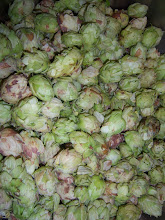
So I finally got around to making my annual Fresh Hop beer with hops growing along the local bike path. Some of them had gotten rather brown and dried out—it is October, after all—but a surprising number were still green and vibrant. And, even better, my fingertips were sticky and yellow by the time I was done picking, which bodes well for both flavor and bitterness. I used the most dried out hops for the bittering addition, and saved the better looking ones for the later additions. As well, there were a prodigious number of seeds—as this picture should attest. All in all, another good fresh hop year all around: four different versions, all exploring ways to push my knowledge of fresh hop beers.

159. The Last Fresh Hop 2013
Mash:
3 lbs. MFB Pale
3 lbs. MFB Special Aromatic
2 lbs. Best Malz Spelt
1 lb. MFB Vienna
1 lb. Breiss Torrified Red Wheat

Mash @ 151° F for 70 minutes w/ 3 gallons RO water & 10 g. gypsum; collected 2 gallons @ 1.076
Batch sparge @ 163° F for 20 minutes w/ 4 gallons RO water & 5 g. gypsum; collected 4 gallons @ 1.024

Collected 6 gallons; topped off to 7 gallons, brought to a boil (60 minutes), & added:
w/60 to go: 6 oz. wild fresh hops

w/20 to go: 4 oz. wild fresh hops

w/15 to go: 4 oz. wild fresh hops

w/5 to go: 4 oz. wild fresh hops

w/0 to go: 4 oz. wild fresh hops

Let stand for 20 minutes, chilled, & pitched mason jar of Wyeast 1272 American II from 156. Fresh Hop w/ Brewer’s Gold

Primary: 10/11/2013 @ 68° F
Secondary:
Bottled:

OG: 1.046
FG:

Tasting Notes:
Friday, August 30, 2013

Fresh Hop w/ Brewer’s Gold Brewday

This beer comes from the first results of Osborn Brewing’s Hop Farming activities. Brent was gracious enough to drop by a couple of bines of Brewer’s Gold this morning on the way back to Monroe, which meant that once I finished office hours, it was time to punch that fresh hop ticket yet again. That first one in the bottle can’t carbonate quick enough! 

156. Fresh Hop w/ Brewer’s Gold
Mash:
4 lbs. Best Malz Spelt
3 lbs. MFB Special Aromatic
2 lbs. MFB Pale
1 lb. MFB Vienna

Mash @ 151° F for 60 minutes w/ 3 gallons RO water & 4 g. gypsum; collected 1 ¾ gallons @ 1.070
Batch sparge @ 168° F for 20 minutes w/ 4 gallons RO water & 2 g. gypsum; collected 3 ¾ gallons @ 1.022

Collected 5 ½ gallons; topped off to 6 ¾ gallons, brought to a boil (60 minutes), & added:
w/60 to go: 1 ½ oz. UK EKG

w/15 to go: 2 ½ oz. fresh Brewer’s Gold

w/5 to go: 2 ½ oz. fresh Brewer’s Gold

w/0 to go: 2 ½ oz. fresh Brewer’s Gold

Let stand for 20 minutes, chilled, & pitched Wyeast 1272 American II

Primary: 8/30/2013 @ 68° F; rose to 73° F over first 48 hours
Secondary:
Bottled:

OG: 1.044
FG:

Tasting Notes:

Wednesday, August 14, 2013

Smith Hop Fresh Hop Brewday

Round two of the fresh hop madness. These hops were the lovely gift of my neighbors, the Smiths—you all remember them from last year, correct?—who again weren’t going to use them. Insanity! But their loss is my fresh hop gain! I was told that these are all Cascade, but I do like the name Smith Hop so much better. I also left enough on the vine that I can go pick an ounce or so for dry-wet hopping in the secondary. Is that even a term? It is now!

155. Smith Hop Fresh Hop
Mash:
5 lbs. Rahr Pale 
3 lbs. Dingemanns Pale
1 lb. MFB Vienna
1 lb. Breiss White Wheat

Mash @ 151° F for 60 minutes w/ 3 ½ gallons RO water & 4 g. gypsum; collected 2 ¼ gallons @ 1.080
Batch sparge @ 169° F for 20 minutes w/ 4 gallons RO water & 2 g. gypsum; collected 4 gallons @ 1.024

Collected 6 ¼ gallons; topped off to 7 gallons, brought to a boil (60 minutes), & added:
w/60 to go: 2 oz. Sonnet Golding leaf 4.1% AA

w/20 to go: 3 oz. fresh Smith hops

w/10 to go: 3 oz. fresh Smith hops

w/5 to go: 3 oz. fresh Smith hops

w/0 to go: 3 ¼ oz. fresh Smith hops 

Let stand for 20 minutes, chilled, & pitched mason jar of WLP510 Bastogne

Primary: 8/14/2013 @ 64° F
Secondary: 8/28/2013 @ 1.010; 8/31/2013 dry hopped w/ 4 oz. fresh Smith hops
Bottled: 9/7/2013 w 3.0 oz. table sugar

OG: 1.050
FG: 1.008

Tasting Notes (10/2/2013): Smith Hop pours a hazy dull gold with a white head that offers decent retention and some lacing. In the nose, there is apple, pear, grape, and candy, along with a spicy, grassy hop bitterness that carries faint hints of both lemon and lemon zest. As it warms, there is more of the earthiness and gaminess I associate with fresh hops beers. Flavors open with soft bread crust and Belgian candy, sliding into lemon, pear, grape, and spicy grassiness from the hops. There is some bitterness in the middle, although restrained, giving way to bread and spiciness in the lead up to the bite of the carbonation, followed by a gentle lingering spicy bitterness that ends with the vegetal chlorophyll gaminess I expect in a fresh hop beer. The body is medium light with hints of gumminess, while the carbonation is bright and cleansing. The hop presence doesn’t come across as distinctly Cascade—it is more delicate and nuanced than over-the-top, and the grape aroma and flavor is an odd yet addition . It is, however, very reminiscent of the fresh hop beer I madewith Smith Cascades last year, which leads me to conclude that as a fresh hop, Cascade provides more subtlety than I would be normally expected. The Bastogne yeast is a moderate match to the beer—I’m guessing the apple and pear is a yeast ester contribution, at least in part—it is noticeable but not intrusive in relation to the hops. As well, these particular Cascades offer more flavor and presence than the Cascades from the first Fresh Hop w/ Cascade of the season, although could also be influenced by the more expressive yeast strain used in that particular beer, the one Elli referred to as my “novelty yeast” for a fresh hop beer. Still, I’ve been rapidly working my way through both of these beers; I’m looking forward to comparing them with the Fresh Hop w/Brewer’s Gold I made that features a more traditionally neutral yeast (Wyeast 1272).

This beer was the Fresh Hop King of Ohio 2013 winner.

Saturday, August 10, 2013

Fresh Hop w/ Cascade Brewday

The Fresh Hop King of Ohio is back to defend his Ohio Fresh Hop 2012 Championship Belt. While detractors abound, nothing says deliciousness like fresh hop beers. Well, fresh hop beers done right, which means avoiding the caramel bomb, bro. This beer features a little over a pound of fresh Cascades from Mankato Farms in New Carlisle; I picked them up at Brewtensils on Saturday morning from Darren, and soon after started adding them to the boil. And as a little twist to this fresh hop delight, I’m trying out a saison yeast this year—ECY08 to be precise. Oh, and a special note to Gus: you better have used those fresh hops and not sat on them. Don’t anger the Fresh Hop King. And don’t worry—for those of you wondering about my usual fresh hops exploits, I’ll be headed out for my annual harvesting of the janky wild hops on the bike path soon!

154. Fresh Hop w/ Cascade
Mash:
5 lbs. Rahr Pale
3 lbs. MFB Pale
1 lb. MFB Vienna
1 lb. Breiss White Wheat

Mash @ 151° F for 60 minutes w/ 3 gallons RO water & 2 g. gypsum; collected 1 ¾ gallons @ 1.084
Batch sparge @ 172° F for 20 minutes w/ 4 gallons RO water; collected 4 gallons @ 1.030

Collected 5 ¾ gallons; topped off with 1 ¼ gallons RO water to bring to 7 gallons, brought to a boil (60 minutes), & added:
w/60 to go: 1 oz. Cluster leaf 7.6% AA

w/20 to go: 4 ½ oz. fresh Cascade

w/10 to go: 5 oz. fresh Cascade

w/5 to go: 5 oz. fresh Cascade

w/0 to go: 5 oz. fresh Cascade

Let stand for 20 minutes, chilled, & pitched ECY08 Saison Brasserie from 152. Saison w/ Spelt

Primary: 8/10/2013 @ 66° F
Secondary: 8/28/2013 @ 1.004
Bottled: 9/7/2013 w/ 3.0 oz. table sugar

OG: 1.048
FG: 1.002

Tasting Notes: Fresh Hop w/ Cascade pours a clear and brilliant straw with a nice creamy white head that delicately laces the glass. The nose is loamy earth, spicy pear, and banana cream pie with bright floral and fruity esters; I did use a saison yeast—a “novelty yeast” as Elli dubbed it—for this beer, so I’m not really surprised that it doesn’t quite read like a fresh hop beer in the nose. In fact, with the expressive yeast, the fresh hops are pretty much drowned out in the nose. My bad. Flavors are similar, opening with bread crust, clove spice, and banana, followed by a gentle fruity bitterness with orange and lemon in the middle, and cracker malt mixed with more clove and lemon pith in the finish. There is clean mineral carbonic bite via the bright carbonation that is slightly peppery even though the beer has a soft, doughy mouthfeel. The beer as a whole is bright and clean, with a fair amount of subtly and balance. Still, as a fresh hop beer, it does fail. Technically, as a saison it is a bit dubious as well, since the bitterness levels are too low: it is dry and well-attenuated, but balanced toward the malt side, even if it is a bone-dry malt side. In the Great Saison Chain of Being, flavors heads towards Hennepin with the soft banana flavors; although this beer is drier in the body. But a good beer nonetheless—it is interesting and enjoyable for all of its faults as a fresh hop beer. For next year, when I try and combine the two styles again—as I undoubtedly will—I’ll choose a more neutral saison yeast that will give the fresh hop subtlety a chance to shine through.

Thursday, April 4, 2013

Osborn Brewing Hop Farm Kickstarter Campaign

As the reigning Fresh Hop King of Ohio, I am very excited about the possibilities of Osborn Brewing’s Southwest Ohio Hop Farm Kickstarter Campaign:

“We are in the process of turning 86 acres of land into a hop farm. This will provide locally sourced hops to area brewers from the hobby to professional scale. This also means that when it comes time to harvest, brewers will have a source of fresh wet hops to use in their seasonal brews. Part of the money raised by your backing will go towards making this a reality. By backing this project, you will help bring us closer to having 100% locally made beers in our area.”
 
A local hop farm would mean that I could get fresh hops from more places than the bike paths surrounding Dayton, and/or the indulgences of my neighbors. While both are certaqinly sources for fresh hops, something tells me that an actual hop farm would, in the long run, be far more helpful. Far more helpful. Thus, I went with the $100 pledge, mainly because it gets me a full pound of the first harvest of hops. Brent, can I trade the other rewards for another pound of those future hops? After all, that’s what Im down for: the hops. As should all of you out there as well. So go check it out, and throw your support behind something that will help take local homebrewing to the next level.
 
 
And Brent, why wasnt making a fresh hop beer with me one of the potential rewards, you cheap bastard?

(4/4/2013)

Wednesday, February 13, 2013

556. De Ranke Hop Harvest 2012

Another beer from our trip to Louisville to see the UCI Cyclo-Cross World Championships. And another European fresh hop beer! Will wonders never cease? This is our third beer from Brouwerij De Ranke in Wevelgem, Belgium, following Kriek De Ranke and Cuvée De Ranke. Basically, if it says De Ranke, count us in.

De Ranke Hop Harvest 2012 pours a clear—albeit slightly hazy—bright gold. It has a thin, clean white head that hangs around and also re-rouses easily. The nose is a mix of fruitiness—from the yeast esters I would think, but they could be hop-derived as well—and Belgian candy malt mixed with hop bitterness. In the nose, it is reminiscent of a Belgian golden ale or a blonde, although the bitterness is more pronounced—it is actually quite beguiling, as the fruit, Belgian candy, and bright spritzy hop bitterness all dance together in the nose. Flavors are clean and crisp with the soft malt character found in many Belgian beers; it starts with malt sweetness and Belgian candy before the bitterness comes into play in the middle. There is also a mineral/hard water component mixed in with the hop bitterness that contributes the light refreshing character. The finish is dry—bone dry—and chalk full of bitterness. There might be a developing brettanomyces component coming in along with the dry bitterness in the finish (this could account for the fruitiness in the nose beyond the yeast esters), as it does finish that dry, but we’re not certain, and we couldn’t find anything online one way or the other. Like Winter 13, this is not quite an American-style fresh hop beer, although this one is much closer than Winter 13. Still, this is a fantastic beer in its own right, and certainly worth looking for again, even as an out of date fresh hop beer. Bank.

From the RateBeer website: “Hop Harvest 2012 is a well balanced blond ale with a floral and grassy character. The 2012 edition has a Père Noël base with XX Bitter hops.”
 
ABV: 6.0%
 
(2/13/2013)

Saturday, February 2, 2013

555. Hof ten Dormaal Winter 13 & UCI Cyclo-Cross World Championships

We found this in Louisville, which we were visiting to attend the 2013 UCI Cyclo-Cross World Championships. And while this beer is good, the racing was even better. Mud? Check! Evil climbs and tortuous tracks? Check! Beer? Check! Disgruntled Europeans? Double-check! The unexpected elements included snow (although I will admit, I did wish for it, and was happy to get it) a flooding river next to the course, which meant that all the Sunday races got bumped to Saturday. Good thing, too, as the course was flooded on Sunday.

After the racing was over, we made our way to the Louisville Beer Store. If you recall, we’ve been there before. Technically, we had tacos along the way at Taco Punk, but for the purposes of this blogpost, I am glossing that part over to speed things up. The beautiful thing about the Louisville Beer Store: you can sample beers on draft while browsing.
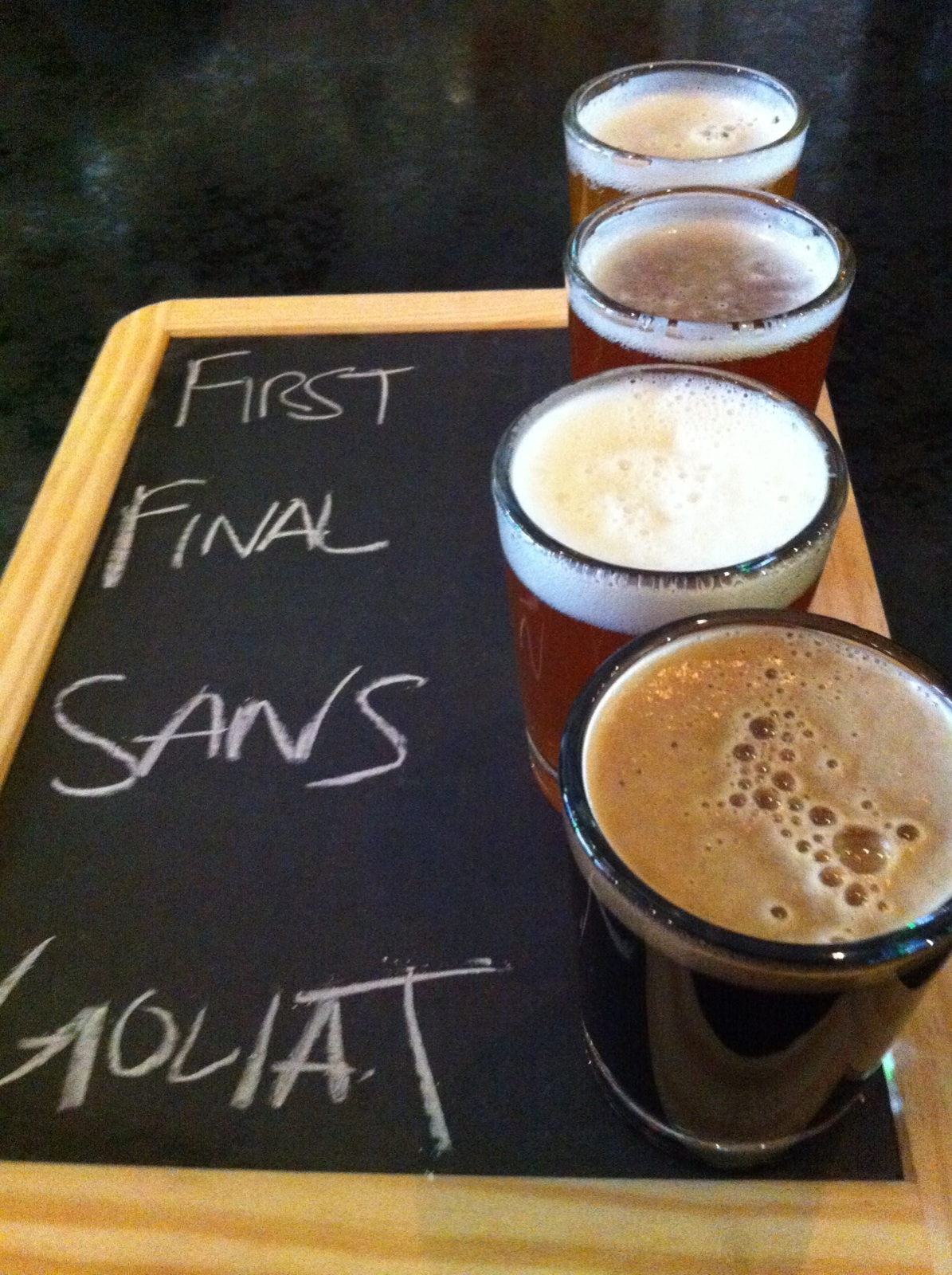
In this case, they had a selection of four To Øl (they’re in Denmark) beers on tap, so we got a sampler of those, which included First Frontier IPA, Final Frontier DIPA, Sans Frontiere Belgian IPA, and Goliat Coffee Imperial Stout. For more on their beers, you can see here. Good beers, and interesting, although the hop presence in the various IPA version was, not surprisingly, below American standards for the style. My favorite was the Sans Frontiere, while Elli’s was the Final Frontier. Anyway, while browsing, we came across Hof ten Dormaal Winter 13, which is described on the label as a “wet-hopped Belgian Farmhouse Ale brewed with fresh hops from the Dormaal Farm.” If you know about my fresh hop fetish, then you know I was sold at “wet-hopped.” Sure, Belgian is great, and Farmhouse is also good—my love of saisons is also well known—but I needed nothing more than the “wet-hopped” descriptor to make this purchase, even with the knowledge that it was most certainly past its prime. I mean, seriously, how hard is it to resist the idea of European fresh hop beer? Wait, don’t answer that question.

Winter 13 pours a hazy burnished gold with a creamy white head that rouses easy and hangs on well. The initial nose is phenolic and slightly plastic-y, but some swirling of the glass bleeds them off, leaving behind grassy and herbal hop aromas followed by bubblegum phenols and candy sweet malt. The Belgian flavors are front and center: candy sweet malt and bubblegum phenols to open, while the middle is slightly gummy with herbal hop flavor leading into a juicy finish that also features a fair amount of dry bitterness. The hops are not as front and center as I would have hoped, but that’s not surprising given that it is February and this is a 2012 wet hop beer (even with the generousness of labeling this a 2013 beer—i.e. following the name of the beer—these are 2012 hops). The carbonation is prickly but not quite spritzy, which balances well with the chewy and gummy mouthfeel. Overall, this is a delicious and fantastic beer; it is not quite up to par for a wet hop beer, as the Belgian yeast character takes over the remaining fresh hop characteristics still hanging around, but the Belgian malt and yeast flavors almost make up for it. As well, the 8.0% ABV does play into muting the potential delicate hop flavors. Nonetheless, I am certainly happy to see that the interest in wet-hopped beers is spreading in the Old World.

Translated from the Wikipedia Hof ten Dormaal page: “Winter 13 (2012), blond beer with an alcohol content of 8%, with the addition of fresh hops from own cultivation (Magnum and Cascade).”

I do so love Google Translate.

ABV: 8.0%

(2/2/2013)

Sunday, November 11, 2012

539. Fort Collins The Incredible Hop Wet Hop IPA

More from Fort Collins Brewery and their The Incredible Hop series. And this one out of a glass you can see through—look at those bright, luscious colors! We’ve had their beers before, most notably The Incredible Hop Imperial India Wheat AleRocky Mountain IPA & Kidd Black Lager.

The Incredible Hop pours a crystal clear and vibrant orangish copper with a wispy tan head, while the nose features too much caramel and toffee, followed by earthy, grassy, and spicy resin hop aroma, and even a touch of pine/evergreen. The caramel does throw a wrench in some of the more delicate aromatics—the spicy and evergreen get lost behind it, especially in conjunction with the earthy and grassy hop character traditionally found in fresh hop beers. I also get a slight touch of buttered toast mixed with alcohol after my nose gets acclimated to the other aromas. Flavors start with caramel, grass, and resin. As it moves towards the middle, pine and acetone come out, along with heat from the alcohol. The bitterness picks up in the final third, along with warmth from the alcohol and a stronger pine and resin hop flavor. Still, however, there is the lingering caramel and toffee. The bitterness and the hop flavors cover some of the alcohol, but the alcohol increases as the beer warms, to the detriment of the beer. It is clean on the tongue; the carbonation and bitterness limits the stickiness, but the cloying elements increase as the beer warms in the glass. I like this beer in theory more than practice; fresh hops are one of my favorites, but this one is skewed toward big and malty, which limits the delicate hop flavors that should be the selling point in a fresh hop beer. Elli thought the caramel flattened the hop character—it was, she thought, too sweet and too big, and tasted more like a mediocre DIPA than a fresh hop beer. Which is disappointing; we’re always excited to try fresh hops beers, but outside the West Coast (well, and notable other exceptions), most breweries go with the more-is-better mantra. In a beer dependent upon the subtlety, nuance, and delicacy of hops in their most pristine condition, dousing them with caramel malt like it was Blue Cheese dressing and/or smothering them in souped up bigger beers seems counterintuitive at best. But then again, maybe it is just us.

From the bottle: “Crystal hops were sourced locally and handpicked off the bines and added to the brewing process the same day. This method is what produces the floral, grassy, smooth character that is so vivid in a wet hop. Harvested once a year in the fall this fresh hop treat is sure to delight your tastebuds and deserves a salute to the generous bounty that surrounds us. From all of us here at FCB, enjoy.”

ABV: not much chatter on this one. Beerpulse lists it as 9%; BA features petty squabbles.

(11/11/12)