Showing posts with label brettanomyces. Show all posts

Tuesday, May 26, 2015

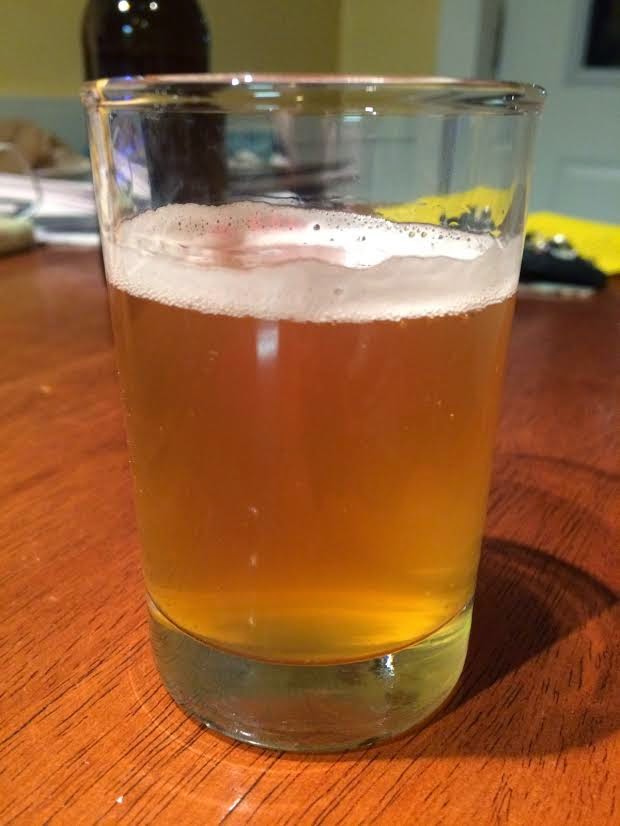
Barrel American Saison w/ Dandelion

This batch (along with 210.) will replace the cider that currently calls the ten gallon barrel on my dining room table home; I’ll fill and soak the barrel with boiling water after I empty it to give the claussenii that is getting added in the secondary a head start over previous bugs and wild yeast that are already in the barrel. As with American Saison w/ Dandelion Flowers, this is another Jeff Alworth-inspired beer intended to experiment with the rustic elements of corn in American craft beer.

209. Barrel American Saison w/ Dandelion
Mash:
6 lbs. Best Malz Pilsen
2 lbs. flaked maize

Mash @ 150° F for 80 minutes w/ 3 gallons RO water, 4 g. gypsum, & 2 g. CaCl; collected 1 ¾ @ 1.072
Batch sparge @ 163° F for 20 minutes w/ 4 ½ gallons RO water; wort collected 4 ¾ @ 1.032

Collected 6 ½ gallons; topped off to 7 gallons, brought to a boil (70 minutes), & added:
w/60 to go: ¾ oz. Azacca leaf 9.9% AA
¾ oz. Comet leaf 10.9 AA
1.95 oz. dandelion root, coarsely chopped
1.8 oz. dandelion leaves

w/10 to go: 5 g. Wyeast yeast nutrient
8 oz. table sugar

w/5 to go: 1 oz. Styrian Golding leaf 3.7% AA
3 ½ oz. table sugar

w/0 to go: ¾ oz. Azacca leaf 9.9% AA
¾ oz. Comet leaf 10.9 AA
4.4 oz. dandelion leaves

Let stand for 20 minutes, chilled, & pitched mason jar of saison yeast from 208. American Saison w/ Dandelion Flowers

Brewed: 5/26/2015
Secondary: 5/31/2015 @ 1.002; added a vial of WLP645 Brettanomyces claussenii
Barrel: 6/14/2015 @ 1.002

209/210a. 1/30/2016 @ 1.000; racked onto 2 lbs. wild plums
209/210b. 1/30/2016 @ 1.000; racked onto 4 lbs. 10 oz. tart cherries
209/210c. 1/30/2016 @ 1.000; bottled w/ 2.5 oz. table sugar

OG: 1.048
FG:

Tasting Notes: 

Saturday, March 21, 2015

More Hoppy LTC Brewday

Another one for the drinking; this one has a different grain bill and a slightly different hop bill, but otherwise it is headed down the same path. Word to your mother, indeed.

204. More Hoppy LTC
Mash:
8 lbs. Best Malz Pilsen
4 lbs. Best Malz Wheat

Mash @ 150° F for 80 minutes w/ 4 gallons RO water, 4 g. gypsum, & 4 g. CaCl; collected 2 ½ gallons @ 1.076
Batch sparge @ 166° F for 20 minutes w/ 4 gallons RO water; collected 4 gallons @ 1.024

Topped off to 7 gallons, brought to a boil (70 minutes), & added:
w/60 to go: 1 oz. Millenium leaf 16.7% AA
1 oz. German Magnum leaf 14.2 % AA

w/20 to go: 1 oz. German Magnum leaf 14.2 % AA

w/10 to go: 1 oz. Comet leaf 10.9% AA
5 g. Wyeast yeast nutrient

w/5 to go: 1 oz. Millenium leaf 16.7% AA

w/0 to go: 1 oz. Comet leaf 10.9% AA
1 oz. Millenium leaf 16.7% AA

Let stand for 20 minutes, chilled, & racked onto LTC yeast cake from 202. Hoppy LTC

Brewed: 3/21/2015
Secondary: 4/12/2015 @ 1.004; dry-hopped w/ 1 oz. Comet leaf 10.9% AA and 1 oz. Millenium leaf 16.7% AA
Bottle: 4/18/2015 w/ 3 oz. table sugar

OG: 1.052
FG: 1.002

Tasting Notes (5/12/2015): More Hoppy LTC pours a hazy and slightly dirty straw; there is decent white head that is bright and shiny while leaving behind a fair amount of lacing. The nose is hay and the herbal spice of Millenium—a mix of mint and that pleasant herbal spiciness you get in Nugget, albeit at a reduced level—combined with some peppery phenolic fruit and lavender hints. I’d call it a spritzy floral character, although at a lower level than the other aromatics. Flavors follow the nose; there is a hint of Pils graininess that hold the body together, but mainly this beer is a vehicle for yeast and hop flavors. There is mint and pepper in the front, followed by herbal hop flavor and a clean bitterness in the middle that gives way to hay, spiciness, and a scratchier bitterness in the finish; the bitterness is bright and crisp, and lingers on the palate with just a touch of mint. The mouthfeel is pretty minimal—this beer is dry dry dry—consisting mainly of bright cracker effervescence from the carbonation that blends well with the scratch finishing bitterness. Combined, the sensation is not unlike the lingering effects of using a minty toothpaste. A tasty and easy-drinking beer; I like the hop profile—I am a bit of a sucker for Millenium—but while well made, there is nothing super-exciting about the beer. Well, besides further confirmation that I do love bone-crushingly dry beers. But we all already knew that! 

Saturday, February 7, 2015

Lambic and Yeast Bay Lochristi Brewday

Another brewday to put some of the pesky yeast lying around to work; the lambic was to get another round of the Rueuze yeast moving (the last one got racked onto five and half pounds of Michigan sour cherries), and the Yeast Bay Lochristi blend was for the starter I made a month ago and was still in search of a home. I like treating my yeast right. And by right, I mean decadently.

196. Lambic and Yeast Bay Lochristi
Mash:
4 lbs. MFB Pale
4 lbs. MFB Vienna
2 ¾ lbs Best Malz Spelt
1  lb. Breiss White Wheat

Mash @ 149° F for 75 minutes w/ 4 gallons RO water & 4 g. CaCl; collected 2 ¾ gallons @ 1.072
Batch sparge @ 166° F for 20 minutes w/ 4 gallons RO water; collected 4 gallons @ 1.028

Topped off to 7 gallons, brought to a boil (60 minutes), & added:
w/60 to go: 1 oz. German Magnum leaf 14.2 % AA
1 oz. Styrian Golding pellet 2.0% AA

w/10 to go: 5 g. Wyeast yeast nutrient

Chilled and split into two 3 gallons carboys:

196a. Yeast Bay Lochristi
Brewed: 2/7/2015
Bottled: 

OG: 1.048
FG:

196b. Rueuze yeast cake from 151a. Gueuze
Brewed: 2/7/2015
Blended: blended during the Old Beer Blending Party

OG: 1.048
FG: 1.000

Tasting Notes:

Sunday, September 7, 2014

Sour Fresh Hop Brewday

This beer was a last minute surprise; I found out from Jeffrey that Heartland Hops was holding a u-pick at YSB with their Nugget hops today, so I scrambled to make this beer happen. I will say that with the glory of hindsight, I should have used a different yeast, but the LTC blend was the best available in the brewing rotation. These hops were by far the best fresh hops I have ever gotten my hands on—the wort was actually bitter tasting prior transferring it onto the yeast, and not just a little. I hope I can score a couple more pounds again next year, and use a neutral yeast like US-05 or 1272 to let these hops shine. Don’t get me wrong—this was a fantastic beer, but the Brett started eating into the hop flavor and bitterness even before I got it bottled: the hop flavor and aroma when this went into the secondary was light years ahead of any other fresh hop beer I’ve ever made, and was still excellent when bottled. But via the Brett, it began to quickly fade. Another lesson on the fresh hop learning curve.

182. Sour Fresh Hop
Mash:
7 ¼ lbs. Best Malz Pilsen
2 lbs. Breiss White Wheat
1 lb. MFB Pale

Mash @ 152° F for 90 minutes w/ 3 ½ gallons RO water & 6 g. gypsum + 3 g. CaCl; collected 2 gallons @ 1.072
Batch sparge @ 166° F for 20 minutes w/ 4 gallons RO water; collected 4 ¼ gallons @ 1.026

Topped off to 7 gallons, brought to a boil (90 minutes), & added:
w/60 to go: 6 oz. Nugget 

w/20 to go: 6 oz. Nugget + 7 g. gypsum

w/10 to go: 6 oz. Nugget + 3 g. Wyeast yeast nutrient

w/5 to go: 7 ¼ oz. Nugget 

w/0 to go: 8 ¼ oz. Nugget 

Let stand for 20 minutes; chilled & racked onto yeast cake from 176. Smoked Sour (custersianus, Trois, and Lactobacillus)

Brewed: 9/7/2014
Secondary: 9/23/2014 @ 1.004
Bottled: 11/4/2014 w/ 2.8 oz. table sugar

OG: 1.046
FG: 1.002

Tasting Notes: For the sake of science, I’ve combined my fresh hop tasting notes for the year. As the photos attest, I did try them all at the same time. The second picture is from the 2nd Annual Fresh Hop King of Ohio competition with Brent Osborne, where my beers came in 1st (183), 2nd (178), and 3rd (182). Yes, there were only seven beers, and four of them were mine. But I’m still the Fresh Hop King of Ohio for 2014, dammit. I would add (as I note below) that 178 is probably the best beer, but 183 is the best fresh hop beer.

178. Smith Hop: made with Cascades from my neighbors; last year, it was by far the best fresh hop beer I made, and it won me the Fresh Hop King of Ohio title. This year it is the best beer in terms of quality, but I am giving the nod to the Bike Path 
Fresh Hop as the best of this year’s fresh hop beers. Smith Hop is the lightest of the four in color, and the most effervescent; it pours a hazy straw with a rocky head, and has lemon zest, lemon, and grapefruit in the nose, along with hints of pepper and orange. Flavors open with lemon and lemon zest, moving into a mineral and pepper bite in the middle, and finish with grapefruit and a slight citrus pith. The malt flavors in the beer are mainly playing a supporting role, while the bitterness is medium and clean. I expected more grassiness from dry hopping this with 4.6 oz. of fresh hops for two weeks (I left a bunch on the vine, and then picked them fresh for dry hopping); as it warms, a slight phenol gaminess comes out, but it balances well with the citrus flavors. Those Smith Hops rock!

180. Brewer’s Gold Fresh Hop: I’ll start with this: I don’t like this beer. It has some off-putting flavors, starting with the phenol band-aid of stressed/unhealthy yeast (as opposed to infection) and ending with the blandness and wood-like flavors from the hops. Others did not have as strong of a negative reaction to this beer as me, but I’m going to chalk that up to them being nice. While the beer did sit too long on the yeast, I’m still not sure how it ended up here. I got these hops from Brent Osborn at Osborn Brewing; I’m not blaming him, however, as the Brewer’s Gold fresh hops I got from him last year were phenomenal. BGFH pours a hazy gold with a thin white head that leaves some lacing; at one point, there were hints of orange marmalade in the nose and body, but currently the nose is merely “hoppy.” Flavors include a light bitterness and scratchy green grass character, but not much else worth noting. Mouthfeel and body match, but off-flavors mar this beer. Haters gonna hate. 

182. Sour Fresh Hop: made with Nuggets from Heartland Hops. This beer is straw colored and crystal clear, with a thin white head that disappears quickly. The nose is herbal and earthy, followed by sour orange and candy pilsen; going into the carboy, there was a much more intense herbal hop aroma that I wish was still here. Flavors open with candy and a slight grain-y Cheerios flavor coupled with wood and herb; the middle features a spicy hop bite—albeit low—and more wood. The herbal flavors come out in the final third, lingering with a dry cracker malt flavor and a hint of sweetness. All in all, this beer is a hot mess—it is neither fresh hop nor sour, while showcasing components of both. While I do like it—it has some intangibles that make it eminently enjoyable—it is simultaneously a pedestrian beer that borders on insulting: I would be pissed off if this was served to me at a bar, but I am glad I made it. That clarify things enough for you?

183.Bike Path Fresh Hop: I’ve been lurking and picking hops off Dayton’s bike paths long enough to note that this year was an exceptionally good year. The hops for this particular beer came from a section of the bike path that I had not utilized before; these hops had none of the ephemeral pear and apple aromas found in previous years, but they did provide more actual bitterness to the beer. BPFH poured a hazy straw with a white head that had more retention and lacing than 180 and 182. The nose was all grimy green chlorophyll and game-y grass, and flavors followed. Unlike some previous iterations of bike path beers, the wild fresh hop character came through. Malt flavors played a back fiddle to the grassiness in the front; the middle was grassy and scratchy, while the finish featured a grimy medium bitterness that was not clean but was enjoyable. The medium to low body and medium carbonation suited the beer; as a whole, this beer was easy drinking. And this beer in particular taught me a lot about how to think about and implement a good fresh hop beer.

Friday, July 18, 2014

Smoked Sour Brewday

Several years ago, I made a Smoked Saison that I always intended to revisit. While this is not quite the same thing, the dry body that accompanies beers using Brettanomyces as a primary fermenting yeast is intended to mirror the saison of old as a means to showcase the subtle smokiness provided by Breiss Cherrywood malt. Plus, I think the layered complexity and added mouthfeel provided by the smoked malt will be a nice match for the other flavors in the beer.

176. Smoked Sour
Mash:
6 lbs. Best Malz Pilsen
4 lbs. White Wheat
1 lb. Weyermann Acidulated
1 lb. Breiss Cherrywood Smoked malt

Mash @ 155° F for 90 minutes w/ 4 gallons RO water & 4 g. gypsum; collected 2 ½ gallons @ 1.082
Batch sparge @ 170° F for 20 minutes w/ 4 gallons RO water & 4 g. CaCl; collected 4 gallons @ 1.030

Collected 6 ½ gallons; added ¼ gallon and brought to a boil (90 minutes), & added:
w/60 to go: 2 oz. Willamette leaf 7.8% AA

w/10 to go: 3 g. Wyeast yeast nutrient

Chilled and racked onto yeast cake from 175. Barrel Beer Dark Saison

Brewed: 7/18/2014 @ 76° F; rose and crested at 82° F over first 24 hours of fermentation
Barrel:
Bottled:

OG: 1.060
FG:

Tasting Notes:

Tuesday, July 1, 2014

Barrel Beer Dark Saison Brewday

It is about time to swap out the current barrel beer for another; this one is a dark saison that I will most likely get aged on fruit. While my version is fermented with the same LTC slurry that has been used in previous barrel beers, Jake is using a saison yeast (I believe he finally settled on Lallemand after the Belgian Ardennes failed to take off) in his 5 gallon batch. The thought behind the yeast combination is that the saison yeast will contribute to the mouthfeel via glycerol production; this is also the intention behind  the spelt and the flaked oats in the mash, as, after all, the Brettanomyces should produce a beer with a very low final gravity, and it will need some body to bring this all together. As per usual, we’ll keep you posted!

175. Barrel Beer Dark Saison
Mash:
5 lbs. MFB Vienna
3 lbs. Best Malz Spelt
1 lb. Weyermann Dark Munich
1 lb. flaked oats
1 lb. D180 candi syrup
½ lb. Special B
½ lb. Weyermann Acidulated

Mash @ 150° F for 70 minutes w/ 4 gallons RO water & 5 g. gypsum; collected 2 ½ gallons @ 1.060
Batch sparge @ 170° F for 20 minutes w/ 4 gallons RO water & 4 g. gypsum; collected 4 gallons @ 1.020

Collected 6 ½ gallons; added ½ gallon and brought to a boil (60 minutes), & added:
w/60 to go: 1 ¼ oz. Willamette leaf 7.8% AA
¾ oz. Millenium leaf 16.6% AA

w/10 to go: 1 lb. D180 candi syrup
3 g. Wyeast yeast nutrient

Chilled and pitched 2 mason jars of Lactobacillus, bruxellensis Trois, and custersianus slurry from 173. Barrel Beer

Brewed: 7/1/2014 @ 74° F
Barrel: 7/18/2014
Fruit: 11/15/2014 @ 1.000; split four ways in 3 gallon carboys; three on fruit and one aged as is
175a. straight  
175b. 6 ½ lbs. sour cherries
175c. 1 lb. 5 oz. elderberries
175d. 4 lbs. pureed paw paws
Bottled: 3/1/2015 w/ 1.75 oz. table sugar for each batch

OG: 1.048
FG: 175a. 1.000
175b. 1.002
175c. 1.000
175d. 1.002

Tasting Notes:

Monday, April 21, 2014

Barrel Beer Replacement Brewday

Time to get ready to swap out the first round of beer currently residing in the barrel, so that means time to make more beer. Such a travesty! Since I already have 5 gallons via the infected No Name Best Bitter, this should give me plenty of gallons to build up that barrel beer stock. Photo is courtesy Jeff Fortney from when we were at Country Boy Brewing for the Craft Writing Conference in Lexington.

174. Barrel Beer 
Mash:
5 lbs. Dingemanns Pilsner
3 lbs. Breiss White Wheat
1 lb. Breiss 2-row
1 lb. Weyermann Acidulated
1 lb. Breiss flaked maize
½ lb. Weyermann Carafoam
½ lb. Breiss Caramel 10° L

Mash @ 152° F for 90 minutes w/ 4 gallons RO water & 5 g. gypsum; collected 2 ½ gallons @ 1.074
Batch sparge @ 170° F for 20 minutes w/ 4 gallons RO water & 5 g. gypsum; collected 4 gallons @ 1.022

Collected 6 ½ gallons; brought to a boil (70 minutes), & added:
w/60 to go: 2 oz. Willamette leaf 7.8% AA

w/10 to go: 3 g. Wyeast yeast nutrient

Chilled and racked onto yeast cake from 170. Barrel Project

Primary: 4/21/2014 @ 68° F
Secondary:
Bottled:

OG: 1.056
FG:

Tasting Notes:

Friday, February 21, 2014

Barrel Project w/ Jake Browning Brewday

A while ago, Jake Browning approached me with a conundrum: he had a 10 gallon barrel that had been handed down to him, but didn’t know what to do with it. I happily volunteered to help brew something to fill it, since collaborative beer projects are usually fun. Then a bunch of time passed. Which is generally how such things work. And then Jake reminded of my promise. So I  made us a recipe, and we each brewed a five gallon batch to put into the barrel. We weren’t super-fastidious as to adhering to the recipe, as the barrel itself—through lack of actual use—may be a bust, but if the first beer turns out, we’ll certainly have a second beer ready to go into the barrel. Oh, and since Jake is scared of introducing wild microbes into his house, he brewed his version with a clean, neutral yeast, and convinced me to keep the barrel at my house.

Via the dubious history connected to said barrel, we did want to take steps to help—as much as possible—produce a “positive” result for the beer that was going into the barrel. With that in mind, prior to racking the beer into the barrel (which smelled like blue cheese and vinegar), we filled it with boiling water and let it sit for 30 minutes, at which point we drained the barrel and then filled it with beer. Will this work? We’ll certainly find out! But our hope is that by killing off as much as possible whatever current organisms were residing in the barrel will give the Lactobacillus, Brettanomyces bruxellensis Trois, and Brettanomyces custersianus a chance to successfully colonize the barrel.

170. Barrel Project w/ Jake Browning
Mash:
7 lbs. MFB Special Aromatic
4 lbs. Breiss White Wheat
½ lb. rolled oatmeal
½ lb. rolled barley

Mash @ 150° F for 90 minutes w/ 4 gallons RO water & 5 g. gypsum; collected 2 ½ gallons @ 1.090
Batch sparge @ 167° F for 20 minutes w/ 4 gallons RO water & 4 g. gypsum; collected 4 gallons @ 1.026

Collected 6 ½ gallons; topped off to 7 gallons, brought to a boil (90 minutes), & added:
w/90 to go: 2 oz. EKG leaf 5.41% AA

Chilled, racked onto yeast cake from 167. Brett Beer w/ Brett & Coffee

Primary: 2/21/2014
Secondary: 2/28/2014
Bottled:

OG: 1.052
FG:

Tasting Notes:

Tuesday, January 7, 2014

More Sour Brett Beers w/ Brett Brewday

Since the first one got moved over today, time for another Brettanomyces and coffee beer collaboration with Brett Barker from Press. This time, however, there will be no lag time for the Lactobacillus, as once mixed, all that yeast ain’t coming apart. We’ll figure out some sort of fruit to throw in the secondary; I believe the Sauce Boss is leaning towards raspberries. Sauce Boss. So awesome.

167. More Sour Brett Beers w/ Brett
Mash: 
7 lbs. MFB Pale
4 lbs. Breiss White Wheat 
1 lb. Weyermann Acidulated 
½ lb. rolled oats

Mash @ 152° F for 60 minutes w/ 4 gallons RO water & 4 g. gypsum; collected 2 ½ gallons @ 1.076
Batch sparge @ 165° F for 20 minutes w/ 4 gallons RO water & 4 g. gypsum; collected 4 gallons @ 1.032

Collected 6 ½ gallons; topped off to 7 gallons, brought to a boil (60 minutes), & added:
w/60 to go: 1 ½ oz. EKG leaf 5.41% AA

Chilled; added 10 ozs. Press concentrate @ 120° F, & racked onto yeast cake from 163. Sour Coffee Brett w/ Blackberries

Primary: 1/7/2014 @ 66° F
Secondary:
Bottled:

OG: 1.052
FG:

Tasting Notes:

Wednesday, January 1, 2014

The Great Brett Experiment II, part 2: Tasting Starters

A new year means it is time for the second round of GBE II starters. Like last time, I mixed 375 g. of DME in 1.2 gallons of water, boiled it, and split it into 4 half gallon growlers, with the aim of creating a 1.030 OG; I also added a White Labs Servomyces capsule. I will most likely bump these up again before pitching, as they’ve been sitting around longer than the previous four. And again, I procured a small sample before swirling the yeast into suspension and adding it to the growler. For those keeping track at home, previous The Great Brett Experiment II posts include:
The Great Brett Yeast Experiment II
The Great Brett Experiment II, part 1: Tasting Starters
The Great Brett Experiment II, part 1 Brewday 

EBY010: The nose is surprisingly neutral; there is light wood pulp and glue with hints of metallic sharpness behind it. Flavors are only slightly more interesting, with lemon and citrus followed by cracker and dirt. There are some hints of acidity in the finish, and maybe a touch of solvent. He mouthfeel is also less watery than the last round, which is a nice touch.

EBY019: In the nose is mainly band-aid and adhesive along with some musty old barn. It verges on goat-y straw, but falls short. Flavors start with candy and over-ripe citrus fruit—like in clausenii—followed by band-aid and earthiness. There is some refreshing acidity and tartness in the finish, leaving the mouth clean with just a touch of paint thinner bite.

EBY035: The nose is mouse-y with hints of dirty barnyard. Put in more graphic terms, it smells like old used straw mixed with dirty socks. The body is stale cracker with some cardboard and candy mixed in. There might be some sourness/acidity developing in the finish, but overall less exciting. Oh, and this one does taste watery.

EBY038: Slight band-aid and lacquer in the nose, along with some grape and general fruitiness, while flavors are mainly candy and citrus. There are also biscuit and cracker hints in the middle, and some citric acidity in the finish. And maybe some more grape.

As a whole, these four were far more interesting than the last four. I like 010 and 038 the best—010 for the acidity in the finish and 038 for the fruit flavors and brightness–but if the flavor cleans up on 019, it will be in the mix as well. As it is, 035 is a bit weak compared to the other three, but it does have potential.

(1/1/2014)

Saturday, December 28, 2013

The Great Brett Experiment II, part 1 Brewday

So the starters I made in early November for the first round of the Great Brett Experiment II finally finished up, which means it is time for another round of starter sampling. And brewing—let’s not forget that. I was also able to take some initial gravity readings for the first four yeasts. EBY008 continues to struggle—I’ll keep hope alive and wish for a miraculous turn around in the next stage, but I’m not holding my breath. As I note below, this is either Dekkera or the yeast was compromised. I’m going with the former as there was much more activity in the initial starter of this one. But who knows. EBY009 continues to be the best of this grouping of four; now that I have moved these four yeasts along, I’ll start growing up the next four shortly.

Gravity readings from starters (with an OG of 1.030):
EBY002: 1.010
EBY005: 1.006
EBY008: 1.026
EBY009: 1.006

Second round of tasting notes: these are pretty similar to the first round, although EBY008 was more sugar water than beer.

EBY002: The nose is slight hints of citric acid and earthiness; flavors are cracker, biscuit, and fruit—grape specifically—so all in all quite similar to the last version, although possibly more subdued. This is the wateriest of the four, and second best in regards to overall quality, even though it is a bit drab.

EBY005: Candy and goat in the nose, along with dirty feet. Flavors have improved, but the lingering goat and dirty feet in the finish have increased—it tastes better in the first two thirds, and worse in the last third. There is also some lingering sweatiness that doesn’t mesh well with the malt flavors. Third best yeast of the four.

EBY008: I suspect that this yeast might be Dekkera instead of Brettanomyces; the mold in the last one was the tell I missed. Either that, or this yeast got compromised, died, or something, as the overall lack of activity. The nose was still cooked vegetables and baby diaper, although more subdued than last time, while it tasted like corn sugar water with a hint of gaminess, followed by oxidized paper in the finish, so at least it was a marked improvement over the last version. Still, worst of the lot.

EBY009: Still the best of the lot, and it has further improved: of the four, this is the only one I finished. The nose is a bit smoky with cereal and cracker, but the acidity has increased in the flavor: there is citric tartness in the front along with the tropical fruit and the finish has a more acidic bite. Less Fruity Pebbles now—it tastes more like Honeycomb with hints of bright pineapple acidity to cleanse the palate.  

165. The Great Brett Experiment II, part 1
Mash: 
8 lbs. MFB Pilsen
3 lbs. Breiss White Wheat 
2 lbs. Weyermann Light Munich
1 lb. Weyermann Acidulated

Mash @ 152° F for 90 minutes w/ 4 ¼ gallons RO water & 6 g. gypsum; collected 2 ¾ gallons @ 1.092
Batch sparge @ 165° F for 20 minutes w/ 4 gallons RO water & 6 g. gypsum; collected 4 gallons @ 1.032

Collected 6 ¾ gallons; topped off to 9 gallons, brought to a boil (90 minutes), & added:

w/60 to go: 1 oz. Styrian Golding pellets 3.2% AA 
½ oz. Czech Saaz leaf 2.4% AA

w/10 to go: 1 ½ oz. Czech Saaz leaf 2.4% AA
2 White Labs Servomyces capsules

Chilled, split into 4 three gallon carboys, and pitched EBY 002, 005, 008, and 009 starters

Primary: 12/28/2013 

OG: 1.050

Update (2/27/2016): This project got lost amongst others: half of 002 and 009 got blended into a Beer & Sweat Brett blend beer (2014); 005 and 008 got blended as a part of Old Beer Blending Party; and the remaining 002 and 009 became 224. Cleaning Up: they were blended together, added to 3 gallons of new wort, and pitched onto 2003. One Last Lambic Hurrah.

Thursday, December 19, 2013

Sour Coffee Brett w/ Blackberries Brewday

Today’s beer was a collaborative project with Brett Barker from Press Coffee; he wanted to see the brewing process from start to finish, and make a sour coffee Brettanomyces beer with blackberries. What more reason do I need? Press Coffee is no stranger to these parts—I’ve used their coffee in beers multiple times, including Coffee Mild, Press Coffee Black IPA, and Wild Wet Hop w/ Coffee—so this is just one more in the long litany of beery homages to Press Coffee. We started with the Lactobacillus and the coffee concentrate, adding the Brettanomyces three days in, and then we’ll toss the blackberries in the secondary—the plan is that the acidity of the coffee and the blackberries will blend well with the yeast-derived tartness.

163. Sour Coffee Brett w/ Blackberries
Mash:
4 lbs. MFB Pilsener
3 lbs. MFB Special Aromatic
2 lbs. MFB Pale
1 lb. Best Malz Spelt
1 lb. Weyermann Acidulated

Mash @ 152° F for 70 minutes w/ 3 ½ gallons RO water & 4 g. gypsum; collected 2 ¼ gallons @ 1.080
Batch sparge @ 164° F for 20 minutes w/ 4 gallons RO water & 4 g. gypsum; collected 4 gallons @ 1.030

Collected 6 ¼ gallons; topped off to 7 gallons, brought to a boil (70 minutes), & added:
w/70 to go: 1 oz. EKG leaf 5.41% AA 

Chilled, adding 10 ozs. Press concentrate at 180° F while chilling, and pitched Wyeast 5335 Lactobacillus @ 100° F

Primary: 12/19/2013 (with Lactobacillus; added mason jars of Brettanomyces bruxellensis Trois and custersianus on 12/22/2013)
Secondary: 1/7/2014 @ 1.004; racked onto 3 lbs. of blackberries
Bottled: 

OG: 1.050
FG:

Tasting Notes:

Wednesday, November 27, 2013

Brett-tastic Brewday

I’m running out of superlatives to describe all the Brettanomyces beers I’ve been making. Which is a good thing (I think), although since more are on the horizon, who knows? Chalk it up to experience and a basement that needs filling.

161. Brett-tastic
Mash:
4 lbs. MFB Pale
4 lbs. Best Malz Spelt
3 lbs. MFB Special Aromatic
½ lb. Weyermann Acidulated

Mash @ 151° F for 120 minutes w/ 3 ½ gallons RO water & 2 g. gypsum; collected 2 ¼ gallons @ 1.082
Batch sparge @ 168° F for 20 minutes w/ 4 gallons RO water; collected 4 gallons @ 1.030

Collected 6 ¼ gallons; topped off to 7 gallons, brought to a boil (60 minutes), & added:
w/60 to go: 1 ½ oz. EKG 5.41% AA

w/5 to go: 1 oz. EKG 5.41% AA

Let stand for 10 minutes, chilled, and pitched slurry from 145b. (100/ECY04)

Primary: 11/27/2013
Secondary:
Bottled: 

OG: 1.052
FG:

Tasting Notes:

Monday, November 11, 2013

The Great Brett Experiment II, part 1: Tasting Starters

I am finally getting around to stepping up the first four yeasts for The Great Brett Experiment II. I know, I know: pathetic. My only real excuse is the lack of carboy space in my house—I’ve tried to draw the line at fourteen three gallon carboys, but you know, some lines in the sand are meant to be crossed. Anyway, I used 375 g. of DME in 1.2 gallons of water, and split it into 4 half gallon growlers for a 1.030 OG. After sanitizing the mason jars, I poured myself a small sample of the starter fluid for tasting purposes prior to swirling the yeast into suspension and adding it to the growler.

EBY002: The nose is musty candy with slight hints of earth and mineral; there is also some of the stale cracker and biscuit I associate with B. bruxellensis. Flavors are subdued as well; slight tartness, a touch of sweetness, and low levels of gaminess. Maybe some grape and low levels of fruit in the background. Still, it tastes pretty watery.

EBY005: Here the nose is candy, horse blanket, and goat-y. Maybe some dirty feet as well. How do I get the candy in relation to the other aromas? Hard work, my friends. But I do it for you. Flavors are candy and a touch of the dirty band-aid with hints of lacquer and solvent. The nose in this one has more going on than 002, and the flavors have a wider range, although the body is about equally watery.

EBY008: So this one did have a few mold spots that initially grew in the starter before the yeast took off. Still, I’m game. The nose is sulfur and cooked vegetables, plus a touch of baby diaper. All are low, but there. There are some soft fruit flavors mixed with candy—grape and possibly citrus—but this followed by oxidized paper and dirty feet, giving it something of the flavor equivalent of the hot garbage smell found in a sour mash via Lactobaccillus. I do hope this one gets better, or at least more interesting.

EBY009: Probably the best of the lot at this point: candy, tropical fruit, and citrus/citric tartness. There is some cereal and cracker—another variant of the smell I associate with B. bruxellensis—but this one ends up tasting a little like Fruity Pebbles with a hint of lingering spent grain flavor. There is some low-level acidity emerging as well.

I’m hoping all the candy flavors aren’t from unfermented DME; the volume on these was too low for a gravity reading, so I’ll have to wait for the next round of starters to check. You know, more of the hurry up and wait. Boom bow bing, you heard the gunplay

(11/11/2013)

Thursday, October 10, 2013

576. Evil Twin Femme Fatale Brett IPA

This beer is my homework for tomorrow night’s Rockit Cup Brett Trois IPA extravaganzaAnd by extravaganza, I mean Brian Gallow and I will compare our respective versions. I’d like to hope that there will be a surprise third or even fourth person, but I’m not holding my breath. Any-whoo, this is our first beer from Evil Twin, and I will note that their website is certainly a step up on Mikkeller’s website, which is still disappointing more than a full month later. Ah, the novelty of discussing your beer on your website. So crazy! Still, Evil Twin does get demerits for the poor copy-editing work on the bottle (see below). But I am forgetting the point, which is Brettanomyces and IPAs, and not my many and varied disappointments. So on to the beer!

Femme Fatale pours a lightly hazy golden straw with a thin white creamy head. When first out of the bottle, the nose features pine from the hops, but as the beer opened, the musty earthiness of the Brettanomyces started taking over. The citrus hop aromas make it through the earthiness—there is lemon and orange, along with some floral aromatics. Flavors start with a soft grainy sweetness, followed by orange and pine resin. The middle is dry, with cracker from the malt, musty earth, and hop bitterness that turns towards pine in the finish. The carbonation is bright and sharp, accentuating the thin, dry body. There is lingering spicy pine bitterness along with some mineral flavors, as well as the earthy gaminess that I connect to Brettanomyces, B. bruxellensis specifically. An interesting beer, one that improved the farther we got into the bottle; the yeast sediment added a creamy consistency that helped round the beer on the palate, cleaning the finish and giving it a pleasant lemon-y brightness. I like this beer, but I liked the brighter, more vibrant hop flavors in both the Rockit Cup versions I tried in conjunction with this beer. Still, it will be interesting to compare how the two Rockit beers age in comparison to this beer: how will the Brettanomyces flavors shift and develop in the bottle? Time will certainly provide us an answer. Hopefully I will like that answer.

From the bottle: “To take up the challenge and make a 100% true Brett beer can very easily become a fatal attraction for the Brewmaster. Ones [sic] you get acquainted with Bretts [sic] irresistible, seductive, alluring and very charming nature, it will ensnare you and drive you to the point of obsession to create the desirable tangy, funky, tart flavors in ya mouth.”

Ahem. Copy-editing, yo. Oh, and it does note on the bottle that this beer was “produced and bottled for Evil Twin Brewing at Westbrook Brewing Co., Mount Pleasant, SC.”

ABV: 6.0%

(10/10/2013)

Tuesday, September 24, 2013

Rockit Cup Brett Trois IPA Brewday

Finally, more exciting Rockit Cup action! This beer is a slightly revised version of Michael Tonsmeire’s 100% Brett Trois IPA. The Trois version got pitched on the not quite finished yeast cake from last week’s Brett Likewise Brewday, so it took almost instantaneously—I think it passed high krausen in under 36 hours. The custersianus was a bit slowly getting underway as the mason jar of yeast had been sitting around for about a month and a half, but once it started it went like gangbusters as well. Hopefully I can get both into the bottle for the October Rockit Cup!

158. Rockit Cup Brett Trois IPA
Mash:
9 lbs. Breiss 2-row
2 lbs. Breiss White Wheat
½ lb. Breiss Carapils
½ lb. Weyermann Acidulated

Mash @ 153° F for 60 minutes w/ 3 ¾ gallons RO water & 4 g. gypsum; collected 2 ½ gallons @ 1.082
Batch sparge @ 167° F for 20 minutes w/ 4 gallons RO water & 2 g. gypsum; collected 4 ¼ gallons @ 1.030

Collected 6 ¾ gallons; topped off to 7 gallons, brought to a boil (60 minutes), & added:
w/60 to go: 1 oz. Columbus pellet 13.9% AA

w/5 to go: 1 oz. Citra pellet 12.5% AA
½ oz. Cascade pellet 7.3% AA
½ oz. Centennial pellet 8.7% AA

w/0 to go: 1 oz. Citra pellet 12.5% AA
1 oz. Cascade pellet 7.3% AA
1 oz. Centennial pellet 8.7% AA

Let stand for 20 minutes, chilled, and racked onto:
158a. yeast cake from 157a. WLP644 B. bruxellensis Trois
Primary: 9/24/2013
Secondary: 9/30/2013 @ 1.006; dry hop w/ 1 oz. Citra, ½ oz. Cascade, and ½ oz. Centennial
Bottled: 10/4/2013

OG: 1.056
FG: 1.006

158b. mason jar from 148a. ECY19 B. custersianus
Primary: 9/24/2013
Secondary: 9/30/2013 @ 1.008; dry hop w/ 1 oz. Citra, ½ oz. Cascade, and ½ oz. Centennial
Bottled: 10/4/2013

OG: 1.056
FG: 1.004

Tasting Notes (10/10/2013): This might be one of the fasted beers I’ve ever turned: 10 days to the bottle, and 15 days to the glass. And this is a Brettanomyces beer no less. Still, the big yeast pitch for each did its work, although I’m also planning on drinking this beer quickly so as to prevent dangerous side effects. Like bottle bombs. The custersianus version in the picture is less carbonated than the Trois version because it was the last bottle, and thus had some extra head space. I pulled the last bottles for this tasting because I’m saving the good bottles for when I try it again in a couple of weeks.

Brett Trois IPA: Pours a hazy straw with a creamy white head that has decent retention, and the beer laces the glass rather nicely. The nose is citrus and tropical fruit—lemon, orange, ripe mango, and pineapple—with a touch of both earthiness and grassiness. Flavors are bright and refreshing: malt sweetness that gives way to orange and ripe pineapple, followed by a clean mineral bitterness mixed with the classic Centennial twang in the middle. The finish is juicy sweet with lots of lemon and lemon zest; there are hints of spicy bitterness and a touch of musty earth, but these flavors pair well with the others. The body is thin, but the creamy, rounded carbonation builds mouthfeel and body. This beer is bright and refreshing; there is a touch of lingering gaminess via the Brett, but this adds positively to the overall impression of the beer. While my allegiance to custersianus makes this hard to say, at this point, the Trois version is a better beer.

Brett Custersianus IPA: Like the other version, it pours a hazy straw with a thin white head; the bottle I had last night was equally carbonated to the Trois version, so I’ll chalk it up to the extra head space in this bottle. The nose is bright and aggressively ripe tropical fruit—mango, papaya, and pineapple—while the earthiness and grassiness found in the other version is absent. The fruit sweetness is equally ramped up in the body as well: it opens with mango and pineapple in the front, while the hop bitterness in the middle is comparatively subdued. It is most certainly there, but the juicy sweetness is as well, both carrying on into the orange and lemon finish. There is lingering bitterness, but it is cleaner and lighter than in the Trois version, although lower levels of the gaminess do come through. Like with the Trois version, the body is thin, but there is a rounded, creamy mouthfeel assisted by the carbonation. While this version has a lower FG, it is sweeter, gummier, and less hoppy than the Trois version. I do like this beer, but the Trois version is the better beer.
Monday, September 2, 2013

The Great Brett Yeast Experiment II

A couple of months ago, I was lucky enough to stumble across Eureka Brewing’s post looking for collaborators for the joint BBA/EBY Brettanomyces yeast experiment. Since I already headed down that rabbit hole myself six months ago with my own Great Brett Yeast Experiment I, I decided I should continue influencing my house character towards, well, delicious. So I signed up. Sadly, I didn’t have the resources to handle all 20 yeasts, so I picked what I could handle. On Saturday, I got a packet of eight small vials containing the Brettanomyces isolates from Sam’s collection:

EBY002 (B. dreifonteinii I)
EBY005 (B. cantillon I)
EBY008 (B. cantillon II)
EBY009 (B. cantillon III)
EBY010 (B. cantillon IV)
EBY019 (B. cucurbita I)
EBY035 (B. cucurbita II)
EBY038 (B. cantillon VIII)

As Sam notes, the names of the different yeasts do not represent current taxonomic nomenclature, but rather the source of each yeast he isolated. Undoubtedly, many are the same. But I’m willing to take that chance in the name of science. And delicious beer.

To prepare the starters, I boiled 200 g. of Breiss Pilsen DME in 2000 ml. of RO water, chilled the wort, and then divided it into 10 sanitized mason jars (I made two extra to simplify the math as well as to give me two extra starters I can use for the dregs of beers I'll be drinking later this week; check back if you’re really that desperate to know). I then sanitized the outside of each vial, added the vial to a starter, and sealed the jar. Now for the waiting. Once things start happening, I can plan to step the starters up, and then get ready to brew two gallon batches of each strain. Hopefully I’ll have enough carboys cleaned out by that point. If not, I can always buy more.

(9/2/2013)

Tuesday, August 20, 2013

570. Crooked Stave Surette Provision Saison

We finally got our hands on some Crooked Stave beers: we tried Vieille on Sunday, and tonight is Surette. Chad Yakobson is the current poster-child for Brettanomyces brewing, so why the hell wouldn’t I be excited? If you’d like to get all old-school, feel free to check out the Brettanomyces Project as well. Colorado never tasted so good!

Surette pours a hazy yellowish tan accompanied by a thin white head that reduces quickly to a ring with several wispy islands; the nose is bright and sharp, with soft oak and a slight smoky adhesive phenol tang along with musty earth and citrus. Flavors start with doughy malt and citrus, progressing into a tannic oak bite with lemon in the middle, and running into some slight dirty band-aid flavors ala a Flanders Red in the finish, including the dark fruit and slightly vinous character of those beers. The combination of earth and lemon-y citrus found in the nose continues in the body, both in the front and the finish, while the mouthfeel is rounded and bright. I appreciate the creamy and yet bright sensations on the palate—a combination created by the carbonation, oak, and yeast—precisely because of the body it gives the beer while still allowing the flavors to sing. The beer also improves as it warms, blending delicately together across the profile. Surette has alluring and interesting flavors, and comes across cleaner than one might expect—it certainly points to the exciting possibilities of Brettanomyces-only fermentation. I did like Vieille more than Surette, but we will certainly be seeking out both again, as well as any other Crooked Stave beers we can find.

From the bottle: “Surette is a provision Saison with a tart and vinous character from extended barrel age.”

From the Crooked Stave website: “Wood Aged Farmhouse Ale brewed with Malted Barley, Wheat, Oats, Rye and Spelt. This beer is a recreation of early 20th century farmhouse provision ales. Surette was fermented and aged in our large oak foeder with Brettanomyces and Lactobacillus naturally present. The secondary fermentation with these critters creates complex aromas and a slight tartness.”

ABV: 6.2% 

(8/20/2013)

Wednesday, July 24, 2013

Brett & Gueuze Brewday

Time to clutter my dining room with more 3 gallon carboys that will be sitting there for at least a year. Because that’s what I need right now, right? Actually, only the gueuze will be cluttering the room for a year or so—with the current temperatures, the ECY05 Brett Blend #9 should finish up by late August or so, at which point it will get some fruit—I’m thinking mulberries, since I recently realized I have something like 30 pounds of fruit in the freezer that need some using. We can see what is trending seasonally at that point, or just pull out the good ol’ reserves. Welcome to round three of The Great Brett Experiment, kids: fruit and brett!

151. Brett & Gueuze
Mash:
6 lbs. MFB Special Aromatic
2 lbs. Breiss White Wheat
1 ½ lbs. Weyermann Pilsen
1 lb. MFB Pale
1 lb. Acidulated Malt
¾ lb. steel cut oats

Mash @ 150° F for 80 minutes w/ 3 ½ gallons RO water & 2 g. gypsum; collected 2 gallons @ 1.090
Batch sparge @ 165° F for 20 minutes w/ 4 gallons RO water; collected 4 gallons @ 1.028

Collected 6 gallons; added 1 gallon RO water, brought to a boil (60 minutes), & added:
w/60 to go: 1 oz. Millenium leaf 16.6% AA

w/10 to go: 1 ½ oz. Sonnet Golding leaf 4.1% AA

w/5 to go: 6 g. crushed homegrown coriander
3 g. crushed cumin seed
3 g. Grains of Paradise

Let stand for 20 minutes, chilled, split batch into two 6 gallon carboys, and pitched:
151a. yeast starter from Bruery Rueuze
Brewed: 7/24/2013 w/ 5 Hungarian oak cubes
Secondary:
Bottled:

OG: 1.056
FG:

Tasting Notes:

151b. yeast from 138b. ECY05 Brettanomyces Blend #9
Brewed: 7/24/2013 w/ 5 Hungarian oak cubes
Blended: blended during the Old Beer Blending Party (2/21/2016)

OG: 1.056
FG: 1.000

Wednesday, July 17, 2013

October Rockit Cup: Brett Trois IPA

I’d like to point out that the idea for this beer is Brian Gallow’s, not mine, although I’m guessing that no one will believe me. That said, I think this is a fantastic idea: using Brettanomyces as the primary yeast. That’s certainly gonna push some knowledge. And who doesn’t need more of that? Nazis, that’s who! This recipe is a slightly revised version of Michael Tonsmeire’s 100% Brett Trois IPA, which is also currently being produced as Modern Times Neverwhere. Rockit Cup: always on point.

October Rockit Cup: Brett Trois IPA
OG: 1.059
FG: 1.012
IBU: 72
Color: 4.59 SRM
ABV: 6.2%

9 lbs. Breiss 2-row
2 lbs. Breiss White Wheat
½ lb. Breiss Carapils
½ lb. Weyermann Acidulated 

Mash @ 153° F for 60 minutes
60 minute boil

1 oz. Columbus @ 60 minutes
1 oz. Citra @ 5 minutes
½ oz. Cascade @ 5 minutes
½ oz. Centennial @ 5 minutes
1 oz. Cascade @ 0 minutes
1 oz. Centennial @ 0 minutes
1 oz. Citra @ 0 minutes
1 oz. Citra dry hop 
½ oz. Cascade dry hop
½ oz. Centennial dry hop

WLP644 Brettanomyces bruxellensis Trois

Ferment @ 68° F

Carbonate to 2.0 volumes

P. S. For those of you who have never brewed with Brettanomyces: do recall that it is a wild yeast that can and will infect the soft plastics you use for brewing. Thus, I would suggest glass for primary and secondary fermentation, and getting a second set of transfer and bottling equipment (or borrowing one from someone who has a second set) to use to transfer and bottle the beer. Sure, your stuff might not get infected, but do you really want to take that chance?