Thursday, December 30, 2010

446. Sierra Nevada 30th Anniversary Jack & Ken’s Black Barleywine

We’re closing out the year with a bang—the final Sierra Nevada 30th Anniversary beer, Jack & Ken’s Black Barleywine. Sure, there is technically another day left in this year, but I seriously doubt I’ll be blogging just for the sake of my one consistent fan (hey Jeffrey!). While I’d like to apologize to all of you out there who feel slighted by my favoritism, since I’ve been told that the second Jeffrey McElfresh Homebrew Drinking Week is about to become a reality, I’m all about playing favorites. After all, what have the rest of you done for me lately? But enough about my blessed good luck: previously from Sierra Nevada, we’ve sampled 30th Anniversary Our Brewers Reserve Grand Cru, Homegrown Estate Ale, 30th Anniversary Charlie, Fred, & Ken’s Imperial Helles Bock, Southern Hemisphere Harvest, Bigfoot, 30th Anniversary Fritz and Ken’s Ale, Kellerweis, Celebration, Torpedo Extra IPA, Anniversary Ale 2009 and Harvest Wet Hop Ale 2008. If it wasn’t your damn anniversary, Sierra Nevada, I might have to complain about the long-ass anniversary beer names. I get it—you’re old and awesome, so stop name dropping.

30th Anniversary Jack & Ken’s Black Barleywine pours a rich, clear chocolate with a creamy cardboard colored head. When we first poured this, it was straight out of the fridge, and it smelled and tasted rather neutral—not much in the way of anything that jumped out and said awesome. So we put it aside for a half an hour, and then came back to it, and that half an hour was helpful. The nose is creamy, with a touch of dark fruit along with caramel, toffee, and licorice—and surprisingly, not much in the way of roasted malt. Chocolate and caramel open the front—more chocolate than caramel—and the roasted malt comes out in the middle, along with a light touch of the dark fruit, but very very little. I’m guessing that will be on the up and up in the next couple of years. There is also bitterness in the middle, which lingers through the finish. The chocolate also comes back at the end; along with the previously mentioned bitterness, there is also some alcohol that lingers on the palate. Black Barleywine has a rich but uneven mouthfeel—the creamy chewiness is nice, but the alcohol warmth and flavor is a bit too forward currently. The creamy carbonation helps, but this beer does need a couple of those “graceful” years alluded to below to balance the beer and allow flavors to marry, as well as allowing the alcohol to fade back into the beer. The current strength is the bitter roastiness, but even then a bit more time is needed to blend the current alcohol warmth. Happy Anniversary Sierra Nevada, you glorious hoppy West Coast bastards...

Somewhere, the Abyss lurks...

From the bottle: “Jack McAuliffe was the first American ‘micro’ brewer. His tiny New Albion Brewery in Sonoma, CA inspired countless dreamers to start small-scale breweries of their own. Jack agreed to brew this very special ale with us in honor of our 30th anniversary. This Black Barleywine Ale is a nod to the legendary ales New Albion served at their summer solstice parties. Rich with bitterness and roasted malt flavors, balanced with whole-cone American hops, this robust ale should age gracefully for years.”

ABV: 10.2%
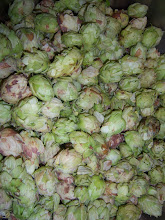
Hops: 100% Cascade

(12/30/2010)

Wednesday, December 29, 2010

445. Great Divide Yeti ’08-’10

Have we had enough Great Divide? Not Yeti! And some where in the distance, a rim shot faintly echoes. This represents the first real payoff for salting away beer in the basement—a three year vertical of Yeti to drink and enjoy. Ah, patience, you heap and task me so. We’ve dranken a whole crap load of Great Divide in the past: Smoked Baltic Porter, 16th Anniversary Wood Aged DIPA, Hercules DIPA, Wild Raspberry Ale, Hibernation, Samurai Rice, Hoss, Espresso Oak Aged Yeti, Fresh Hop, Double Wit, 15th Anniversary DIPA, and Denver Pale Ale. That’s right—the mini-vertical is lucky number 13.

Yeti 2010: Roasted chocolate bitterness in the nose; inky chocolate brown color with red highlights and the weakest head retention of the three. Dry chocolate and biscuit front, moving into bitterness in the middle that runs on into the end, lingering along with a touch of alcohol on the back of the throat. There is also a fair share of roastiness in the middle and end; some chocolate returns in the finish, albeit with more of a cocoa flavor than previously. Yeti 2010 has a rich, chewy mouthfeel with a fair amount of alcohol warmth that mitigates the smoothness. The bitterness and the alcohol warmth are currently the defining features of the beer, covering over a lot of the other flavors. Good, but should get better.

Yeti 2009: Nose is starting to ripen towards the 2008, but with much more chocolate (almost like Southern Tier’s Choklat) currently evident; some of the bitterness of the 2010 remains, along with a touch of cardboard. Best head retention, and same color as 2010. Rich chocolate to start, moving into roastiness in the middle; slight rise in sweetness in the finish with just a touch of sourness along with low levels of lingering bitterness—although the bitterness tastes like it is more from the roastiness than the hops. Smoother overall mouthfeel; while the alcohol warmth is still present, it is much less intrusive. Not surprisingly, this beer is getting better with age.

Yeti 2008: Dark fruit and creamy rich chocolate in the nose; head retention somewhere between the last two, and, shockingly, the same color as the last two. Opens with chocolate and toffee before moving into oxidized dark fruit—cherry, prune, and raisin—in the middle; the finish has a touch of roastiness along with cocoa and chocolate, with the roastiness lingering lightly. This beer has the roundest and richest mouthfeel—Yeti 2008 is simultaneously creamy, silky, chewy and delicious. There is hardly any alcohol warmth, which allows the creamy cocoa and chocolate to tantalize the taste buds across the profile. The trip down drinkability lane has paid off for this beer—I only wish we had more of it left.

From the bottle (it says the same on all three): “Yeti Imperial Stout is an onslaught of the senses. It starts with big, roasty malt flavor that gives way to rich caramel and toffee notes. Yeti gets its bold hop character from an enormous quantity of American hops. It weighs in at a hefty 75 IBUs.”

ABV: 9.5%
IBU: 75
Bottled on: January 2008, October 6, 2009, and sometime in 2010—wouldn’t you know it, the most recent four-pack we bought (last week) didn’t get stamped with a date. Thanks, Great Divide.

(12/29/2010)

Saturday, December 25, 2010

444. Mikkeller Rauch Geek Breakfast

Christmas wouldn’t be Christmas without booze and family, would it? Our coffeecake brunch needed something to round it out, and that something was Mikkeller’s Rauch Geek Breakfast, renamed for the U.S. market because we’re easily confused. Now that’s the breakfast of champions! Since Mikkel Borg Bjergsø is a gypsy-brewer, this beer was brewed and bottled at Nøgne Ø in Grimstad, Norway. You know what that means, don’t you? Grimstad water is in the house! This is our second beer from Mikkeller; the last one was Simcoe Single Hop IPA.

Described on the label as a “smoked oatmeal stout brewed with coffee,” Rauch Geek Breakfast pours a rich dark chocolate with plenty of red in it, and a fair amount of garnet highlights as well. There is minimal head retention for the brief cafe au lait colored foam produced during the initial pour, and subsequent pours dissipated pretty quickly as well. The nose is mostly smoked malt and that slightly sour aroma that comes with smoked beers—there is a bit of darker malt sweetness, but it is pretty well buried under the smoked malt. Opening with chocolate and smoke flavors, Rauch Geek Breakfast moves into a roasty and smoky middle that is also dry and lightly mineral-ly. There is a touch of coffee, but it comes across more as roasted flavors—the smoked malt seems to be covering over the coffee almost completely. The finish features a return of chocolate along with a light peat-y smoke character with a touch of sweetness to close things out, followed by a lingering smoky sourness. Rauch Geek Breakfast has a silky smooth mouthfeel via the oatmeal; there is also a fair share of dryness, which is either created or accentuated by the smoked malt, and a slight accumulation of warmth in the back of the throat. The carbonation helps dry out the beer as well, but is only minimally present across the profile. An interesting and enjoyable beer, but one that comes across more as a dark smoked beer than it does as an oatmeal stout—the smoked malt character is excellent, but it does cover over other more nuanced flavors in the beer, like the coffee.

From Beer News: “It is the same recipe as Beer Geek [Breakfast Stout] but with all the base malt replaced with smoked malt.”

ABV: 7.5%

(12/25/2010)

Wednesday, December 22, 2010

443. Three Floyds Moloko Milk Stout

We’re punching that Three Floyds ticket again, and I’m pretty sure you can’t blame us. And if you do, well then, you can suck it. That’s right, I’m 12 again, and I have no better come back. Our previous evenings of delight include Blackheart IPA 2010, Dark Lord 2010, Rabbid Rabbit, BrooDoo Harvest Ale, Brian Boru, Gumballhead Wheat, Robert the Bruce, Dreadnaught, Black Sun Stout and Blackheart IPA. Since the doubling up on Blackheart only counts for a ½, that means we’ve had 10 ½ from Three Floyds. Love the math. And just in case you were wondering, Malcolm McDowell is still creepy after all these years.

Moloko rolls out of the bottle an inky black with a rich brown head that dissipates to a ring rather rapidly, and from there to almost nothing; it also has some garnet highlights. The nose is chocolate mixed with creaminess; there is also a slight sourness, but you’ve gotta work a bit to find it (well, in the nose, not so much the flavors). Opening with creamy milk chocolate and cocoa sweetness, Moloko has a touch of the sourness from the nose in the middle along with an ever so slight trace of roasted and coffee flavors. There is a return of sweetness in the finish, along with a bit of alcohol warmth—Elli calls it slightly cloying, but I’m not sure I agree—and some nice lingering chocolate flavor. Most certainly, however, this is not as roasty as expected, especially after the “deep roasted” comment on the label: the middle is something of an empty vacuum currently, the place where the roasted and bigger flavors should be residing to round the overall beer. The body is medium to heavy, and the mouthfeel is smooth, creamy, and slightly slick on the tongue—the mouthfeel, along with the initial chocolate and cocoa flavors, are the strengths of this beer. There is also a touch of alcohol warmth in the mouthfeel. Nonetheless, this is a good beer—not great, but good. However, filling out the middle would make this a great beer—it has pretty much everything else it needs besides a richer, chewier, thicker middle.

From the bottle: “This Milk Stout is brewed with a portion of Golden Naked oats and lactose milk sugar to give it a rounded and full-bodied mouth feel. With a deep roasted and slightly sweet maltiness.”

From Rate Beer: “Baltic Milk Stout named after the famous milk drinks from A Clockwork Orange.”

Oh, and here’s what the Hopry has to say about Moloko.

ABV: 8.0%
IBU: 30

(12/22/2010)

Sunday, December 19, 2010

442. Russian River Damnation

dam·na·tion, n 1. the act of damning. 2. the state of being condemned to eternal punishment in hell.

This beer was a gift from Dave Williamson, who scored it on a trip out to California; traveling does always help with the chance to try out new things, and it is nice when that opportunity rolls down hill. As well, Russian River does like playing the definition game, and definitions are always nice as well. So there’s a lot of niceness revolving around today’s selection. And that’s nice. Previous selections from Russian River include Consecration, Temptation, Pliny the Elder and Blind Pig. Drink on, my brothers, drink on.

Damnation pours a crystal clear straw color; the light white head quickly rings the glass, but small tight bubbles continue to flow, giving the beer something of a champagne appearance. The nose is very perfume-y—there are floral, spice, and fruit (mostly apple) characteristics, along with an earthy mustiness that strikes me as a combination of yeast and hops, or, basically, the classic Belgian golden ale aroma. Warmth leads to an increase in pear aromatics. Flavors start with a dry, crisp malt sweetness before moving towards light floral fruit flavors in the middle with apple and grape being the most distinct, followed by a light pear. The finish is a combination of musty and earthy bitterness, although the bitterness is light—it and the mustiness compete to be the last flavor on the palate. Damnation has a medium body with a bright but dry carbonation: there is a slight brut quality to the finish. While there might be a touch of alcohol in the finish as well, as a whole the alcohol is nicely subdued, allowing the other flavors to dance delicately across the palate, which was one of the strengths of the beer. As with all things Russian River, Damnation is a well-crafted beer, and much more drinkable than many of their other selections, although that ABV could quickly lead to trouble...

From the bottle: “In the great beer producing country of Belgium, there is a tradition among some brewers to name their brews something unusual. Often the name is curious, sometimes diabolical, and occasionally just plain silly. Damnation is a hand-crafted Golden Ale with an exquisite bouquet of fruit and spice with mouth filling notes of citrus, malt, cedar, and earthy hops. The smooth dry finish lingers until your next sip. Damnation is refermented in this bottle to create its fine carbonation. Spent yeast cells form a thin layer of sediment in the bottom of the bottle, adding more complexity and flavor. Pour slowly, allowing the natural yeast sediment to remain in the bottle.”

From the Russian River website: “In the great beer producing country of Belgium, some brewers have made it a tradition to give their beers an unusual name. Sometimes the name is curious, now and then it is diabolical and other times it is just plain silly. Damnation is our brewmaster’s interpretation of a Belgian style Strong Golden Ale. It has extraordinary aromas of banana and pear with mouth filling flavors of sweet malt and earthy hops. The lingering finish is dry and slightly bitter but very, very smooth.”

ABV: 7.75%
Batch: 057X1
Brewed: 4/26/2010
Bottled: 5/21/2010
OG: 1.068
IBU: 25
Primary Yeast: Abbey Ale Yeast
Conditioning Yeast: Rockpile

Oh, and we also tried a Stoudt’s Fat Dog Imperial Oatmeal Stout bottled on 9/1/2004 this evening. The oatmeal creaminess was nice, and there was a subtle vanilla flavor that contributed well to the overall impression of the beer; it was enjoyable, but the flavors were a bit flat and flabby. But being that it was six years old, that is understandable.

(12/19/2010)

Saturday, December 18, 2010

441. Smuttynose S’muttonator

More from Smuttynose’s Big Beer Series. And sorry, no rhymes for this dopplebock. You’ll live. Smuttynose continues to mock me with their Big Beer Series Subscription possibilities. Damn you, Smuttynose, for being so tasty. Just remember: if you make an exception for me about that whole “no shipping” rule, no one besides you and me will ever ever need to know. Well, besides Elli—I mean, I would have to explain why beer was showing up in the mail. But she already thinks I am magical, so that really wouldn’t count anyway. Our previous slavish devotion to the beers of Smuttynose include Big A IPA, Old Brown Dog Ale, Baltic Porter, Imperial Stout, Shoals Pale Ale, Finestkind IPA and Farmhouse Ale. That Baltic Porter vertical I’m secretly compiling is gonna be the bee’s knees.

S’muttonator is a lightly hazy rich caramel toffee and has an ivory head that starts strong but quickly reduces to a ring with a small island. There is still decent carbonation action after the head dissipates—the color helps foreground the small tight white bubbles adding to the edges of the ring around the glass. In addition, there are orange and ruby highlights that accentuate the rich caramel color. The nose starts with a creamy caramel maltiness, followed by toasty, melanoidin, and raisin aromas; the dark fruit and raisin mix well with the toasty caramel malt—the nose is especially well balanced. Rich malt and caramel are the initial flavors at the front of the beer, with the dark fruit flavor—mainly raisin, plum, and fig—coming out in the middle. There is a light creaminess in the turn to the finish, and a return of malt sweetness along with some alcohol warmth that lingers past the clean finish. S’muttonator has a medium to heavy body with even, smooth mouthfeel; the beer is lightly chewy along with the warmth provided by the alcohol, and the lightly creamy carbonation helps round the beer as a whole. Melanoidin flavors increase with warmth, and a light, almost cocoa-like flavor lingers with the alcohol on the back of the throat. An enjoyable and well-crafted beer; I might age it a bit longer to allow the alcohol flavors to tone themselves down just a touch in the finish, but I did like the balance between malt and fruit in this beer, which was yummy. And yes, that is one of the descriptors that the next revision of the BJCP will be adding to good ol’ category 5C: yumminess. Remember, you heard it here first.

From the bottle: “S’muttonator is a tasty mixture of German ingredients & good ol’ fashioned New England tenaciousness. Our brewers take 30 hours to brew a single batch of this traditional Double Bock. Take your time & enjoy its rich malty & deceptively smooth flavor.”

From the Smuttynose website: “As the name implies, a doppelbock (double bock) is a very malty German lager beer. Typically quite sweet with some roasted malt undertones, doppelbocks range in color from deep amber to nearly black and are normally associated with the winter season. Traditionally, German brewers have used the suffix ‘-ator’ in naming their doppelbock beers; we have, too.”

ABV: 9.5%

Bee’s knees? Puh-lease.

(12/18/2010)

Thursday, December 16, 2010

440. Bell’s Batch 10,000

The last in a long line of delicious beers. Ah, Batch 10,000, I feel like I hardly know you and your previous siblings, and yet, you’re already part of the past. Before that tear of nostalgia blurs my eyes and makes me unable to type, I’ll note that we’ve previously tried a fair share of the beers from Bell’s: 25th Anniversary Ale, The Oracle, Oarsman, Bourbon Barrel Hell Hath No Fury Ale, Batch 9000, Hopslam, Cherry Stout, Sparkling Ale, Winter White, Christmas Ale, Third Coast, Oberon, Octoberfest, and Two Hearted. Fifteen, all told. If I was paid by the review, I’d have some extra quarters and dimes in my pocket. Hell, if I was paid at all, that would be a start. Well, besides in guff and smarm. I’m looking at you, McElfresh...

Batch 10,000 pours a rich, clear walnut with rosy red highlights; the head is tan and rather creamy. While the head does reduce to a bare covering over the course of a couple of minutes, a quick swirl of the glass brings another layer that exhibits equal staying power. A smoked malt aromas is the most distinct smell in the nose, although I can’t quite decide if it has a peaty undertone to it (later: yep, that’s peaty). There is also a touch of dark fruit and some hoppiness, along with lower levels of brown sugar, caramel, creaminess, and tobacco, but that smoke character is all up in it. As it warms, a slight juiciness emerges, but it is still under the master hand of the peat smoke aroma. Flavors start surprisingly dry and biscuity with a light residual caramel and herbal trace accompanied by smoked peat. The bitterness begins part way through the front before taking over in the middle, along with a dry mineral smoky and herbal medicinal flavor—the hop character is slightly reminiscent of Tröegs Nugget Nectar for the herbal hop bitterness, although the smoke makes this harder to pick out. Batch 10,000 has a lightly chalky and dry finish mixed with smoke, although there is a certain latent creaminess. There is also a noticeable alcohol tang that competes with the peat smoke and dry tobacco flavors of the finish for the last taste in the mouth. The carbonation bite in the final third accentuates the smoke flavors; other than that, however, the carbonation doesn’t do much besides contribute to the creaminess and slight silkiness of the mouthfeel—which is there, but hidden underneath the flavor smorgasbord. The mouthfeel is dry, but slightly chewy in addition to the silky viscous feel on the palate, and there is a fair amount of alcohol warmth, especially as it warms. Quite a complex beer; it will be interesting to see how Batch 10,000 continues to develop over time as the flavors blend and meld across the profile. Flavor-wise, there is a fair amount of Scottish Ale present via the peat smoke, but the dryness of the body places it elsewhere—or at least the dryness as perceived through the current alcohol, bitterness, and smoked components of the beer. As those shift and change, so to could the body. While at times a bit uneven, I am glad I tried Batch 10,000 young so that I have a baseline to compare subsequent bottles to over the next several years. After all, by then Bell’s will be on Batch 76,000 or something, and we’ll have all kinds of other delightful treats concocted by that master of chicanery, Larry Bell. I can hardly wait.

That’s our Larry! (Stolen from here)

From the bottle: “The last of the ‘Batch’ series. Thanks for all the consumers that got us this far.”

From the Bell’s website: “The last in our Batch series is being packaged today and tomorrow. While we are excited to free up some brewing space for other creative projects, the end of the Batch series marks a major milestone for us, and is a little bittersweet being the end of an era. Batch 10,000 reflects our homebrewing roots and was inspired by the last homebrew of the season. Our owner Larry Bell remembers going through his brewing supplies and making the last homebrew out of whatever malts and hops were left from his brewing months. With this being the motivation behind our last commemorative batch series beer, we combed through the catalogs of many malt and hop suppliers to source 100 different malts, grains, and other fermentables. This is balanced by the addition of 60 different hop varietals between the kettle and dry hopping. The resulting beer presents a deep, chocolate brown hue and offers roasted and caramel notes from the malts mixed with an assertive hop character. Feel free to drink it fresh, or vintage age it as you please. We lift our glass in appreciation to Bell’s drinkers who have helped us reach this moment in our brewery’s history. Cheers to you!”

ABV: 9.2%
Bottled: November 16, 2010

And what the hell is that creepy creature on the Bell’s 21 or older sign in page? The Evil Sith Lord of Bell’s? And no, I’m not talking about the picture above. Larry, you trying to kill my buzz? Stop that, dammit!

(12/16/2010)